
LogiQ Music Streaming Server
Reference Streaming,
Voiced Track by Track
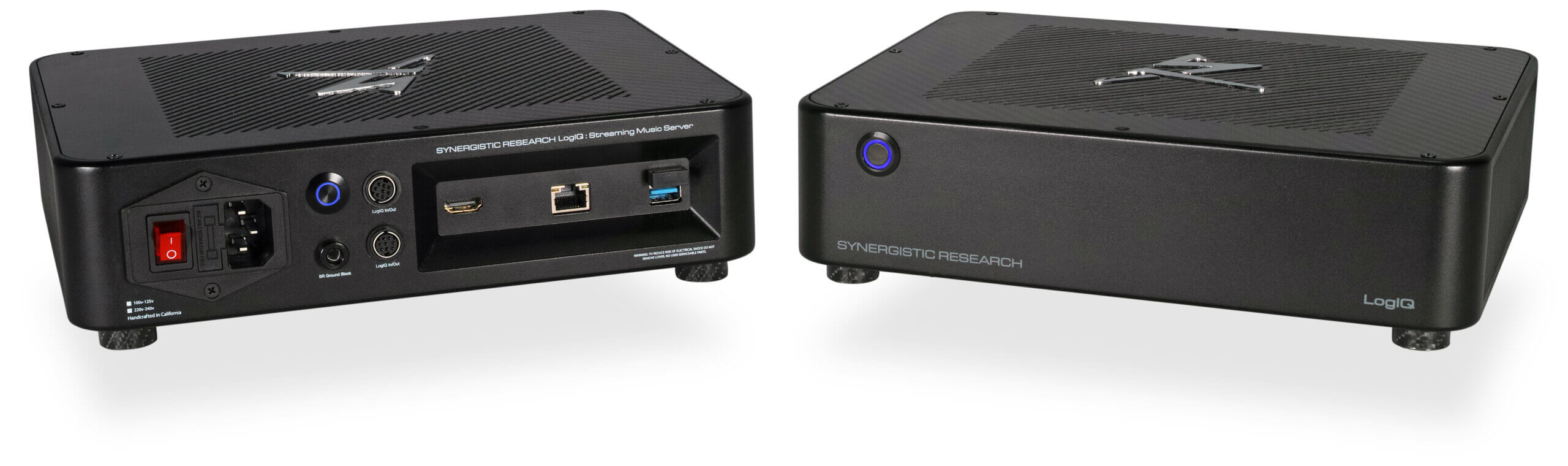
Your server is the one component in your system that knows exactly what is playing. The LogiQ Music Server, built on our Quark platform, adds a resident LogiQ brain that reads each track from Roon and tunes the ULF environment of its own circuitry to suit it, leaving the data stream untouched. Set it up once, and every recording finds its voicing on its own.
One Setting, Every Recording
One Voicing Was Never Enough
Every streaming server we have built carries a ULF generator. It uses technology we first developed for our PowerCell line conditioners and Active Ground Blocks, and it biases the electromagnetic environment the circuit operates in. Every one of those servers has also asked you to choose its setting by hand: Blue for most listening, Red for recordings mixed with deep phase information. Then the setting stays where you left it, for the string quartet and the electronic record alike, because no one gets up between tracks.
That was the compromise we accepted: one voicing for an entire library. LogiQ showed us how large the space of possible fields really is, with more than a trillion combinations of frequency and waveform, and how differently two recordings respond inside it. A server that knows exactly what it is playing should not voice every track the same way.
The LogiQ Music Server does not. Acoustic recordings keep their intimacy and air. Large productions open into the space they were mixed for. Across an evening of shuffled listening, the stage no longer resets to a compromise between tracks.
Press play. Roon names the track. The field follows.
The LogiQ Platform
Automatic by Default. Yours by Choice.
The LogiQ Music Server brings the LogiQ platform into your source. Leave it to Auto ID and every track arrives voiced. Open the app and the same intelligence becomes a set of tools, from a plain-language request to the waveform itself.
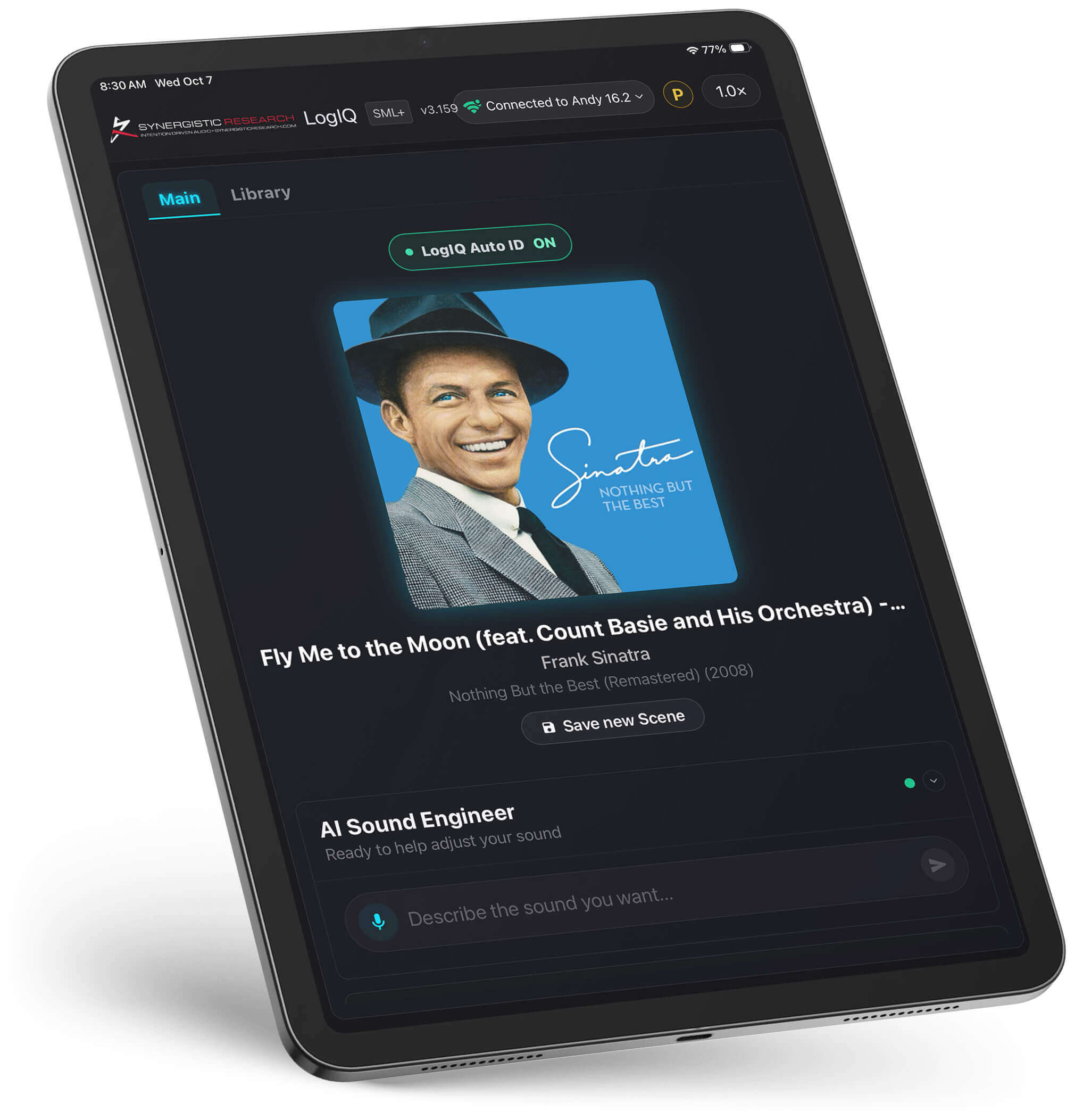
Auto ID LogiQ
(LogiQ Music Server Required)
Voiced Without a Tap
Auto ID LogiQ reads each track’s information directly from Roon and applies the LogiQ ULF settings matched to that recording, or your saved scene where one exists. The LogiQ brain resides in the server, so nothing depends on your phone. Close the app, put the tablet away, and every track you play still arrives voiced.
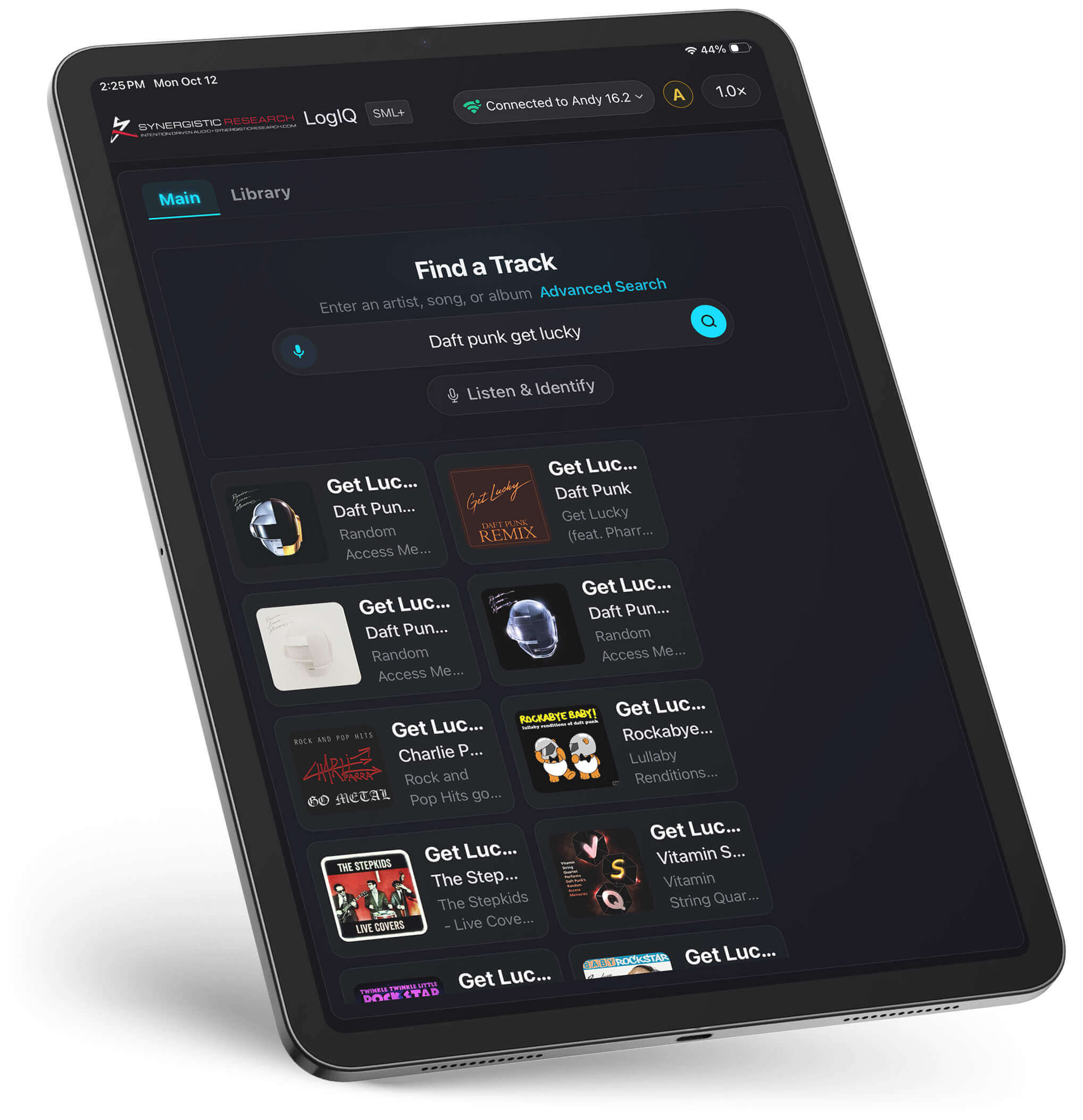
Track Lookup
A Starting Point for Every Recording
Track Lookup identifies the recording as it plays and sets the field to a starting point matched to it. That starting point comes from the voicings our designer arrived at by ear. A solo cello and a large electronic production ask opposite things of the field, and each gets its own beginning. From there, LogiQ refines toward what the recording needs and what you have taught it to like.
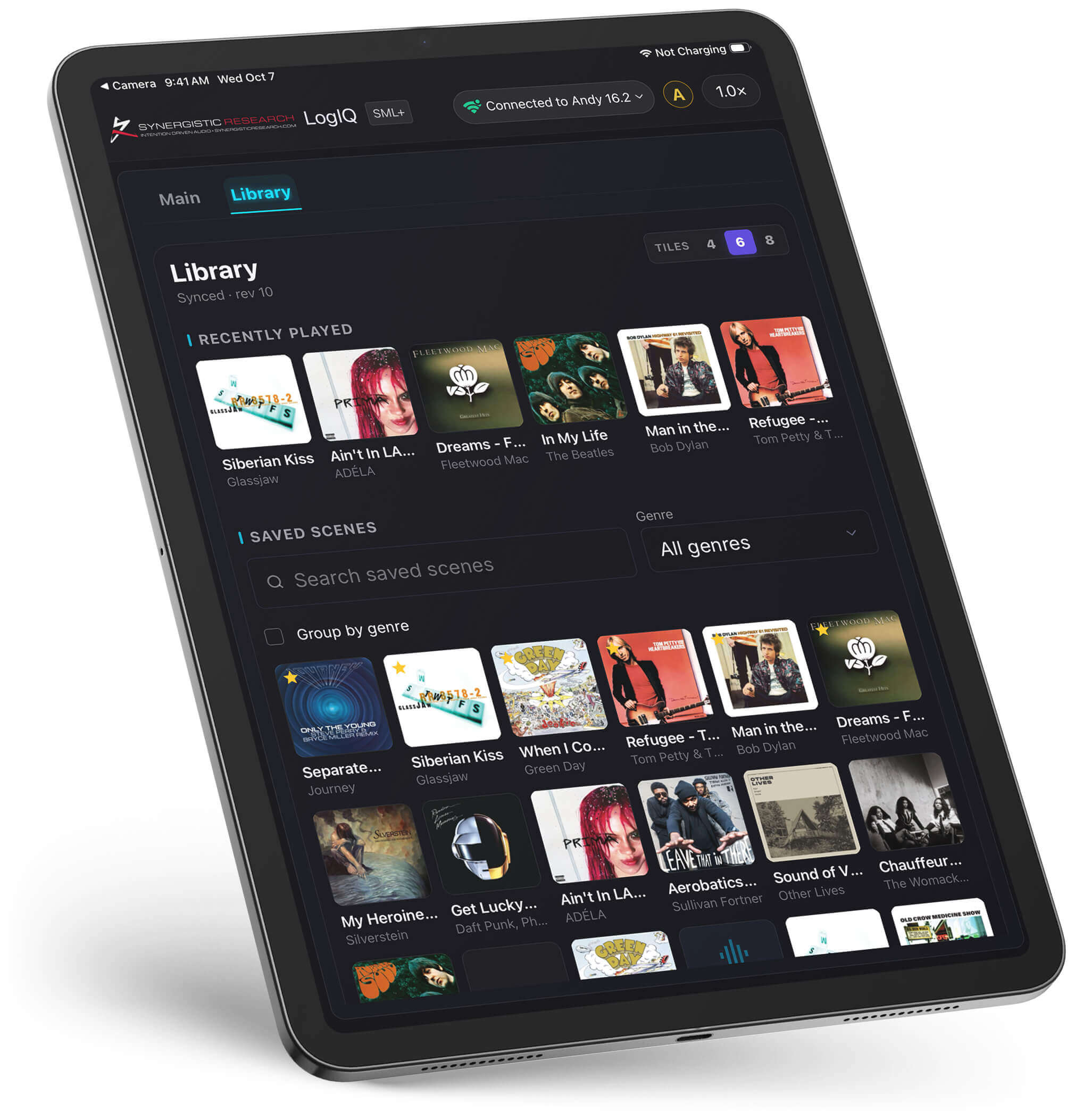
Saved Scenes
Dial It In Once. Hear It That Way Every Time.
Save a setting, and LogiQ files it as a scene under the cover art of the track you were playing. The next time that track plays, your scene loads in place of the factory starting point. On the LogiQ Music Server it loads even with the app closed. Scenes save as files you can move between systems and share with other LogiQ owners, so an evening of careful listening becomes a single tap for someone else.
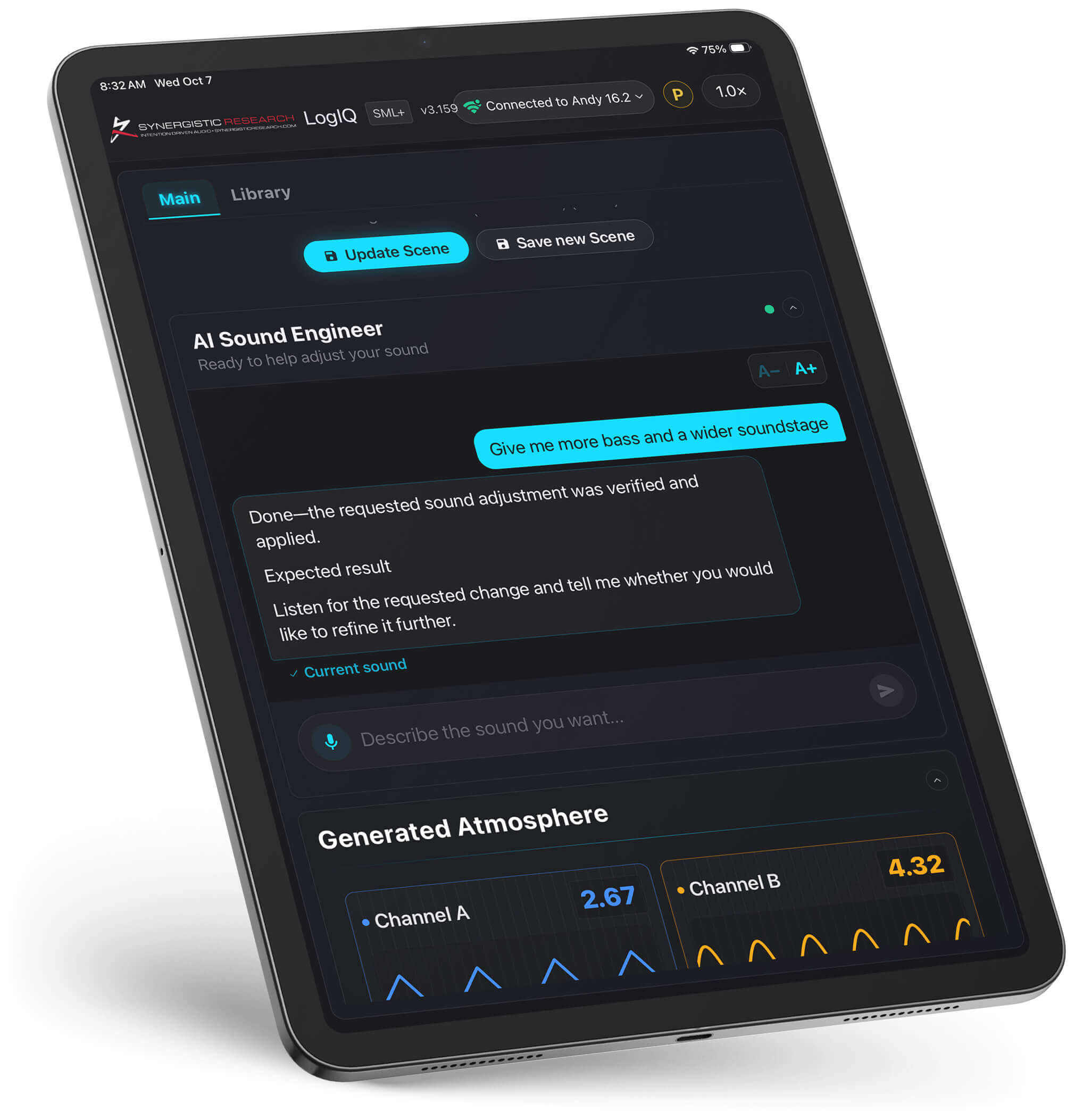
AI Sound Engineer
Ask for Smoother Vocals
Tell the AI Sound Engineer in plain words what you want to hear, such as more space between the players or the singer brought forward. It adjusts the field and tells you what it changed. It is also honest about its limits. Push too far and the image begins to lose focus, so you hear exactly where a setting stops serving the music. Speak, tap, or set things yourself.
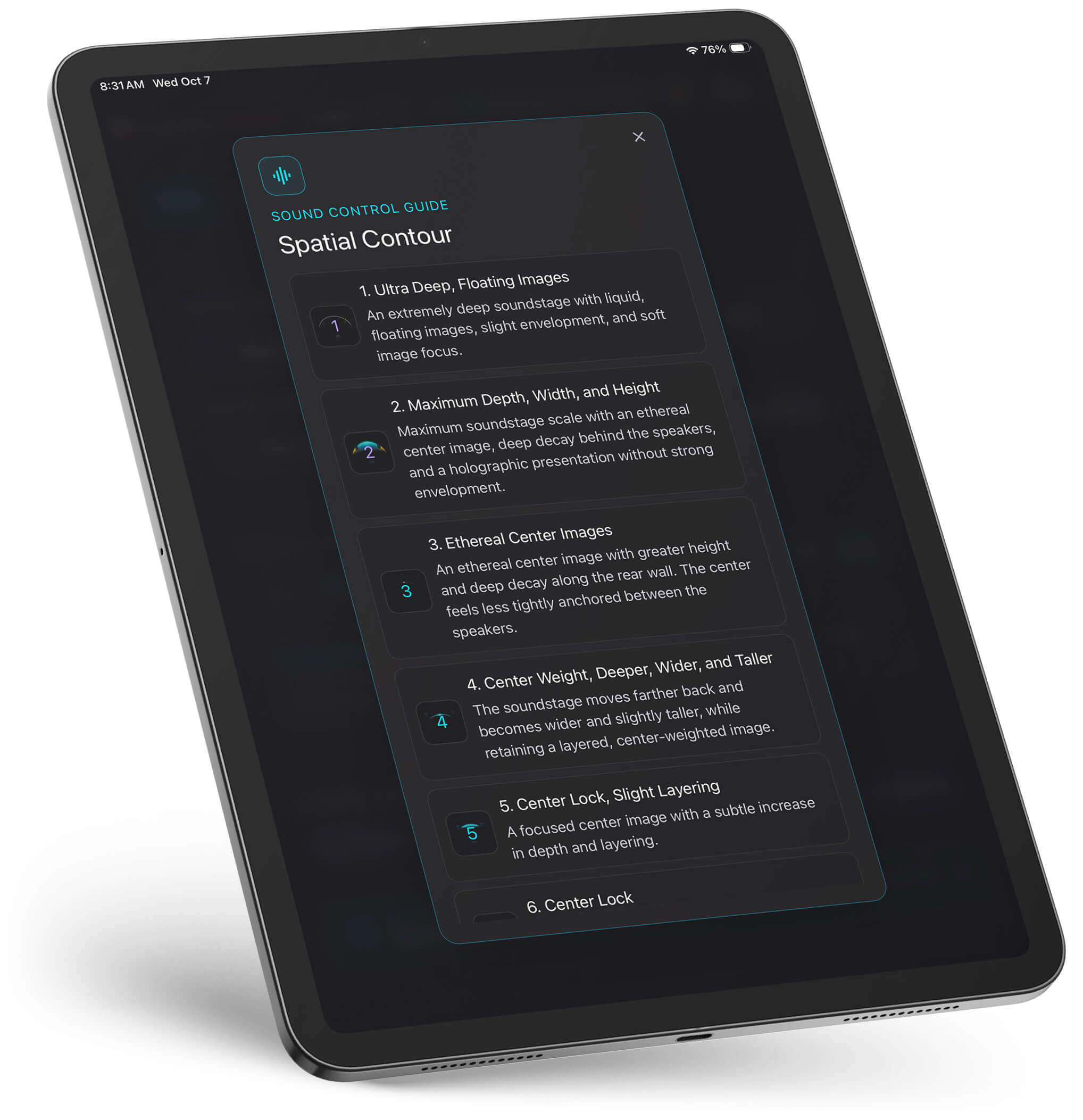
Spatial Contour
Deeper, Wider, or All Around You
When a system is set up well, the speakers disappear and the music forms a stage in front of you. Spatial Contour lets you shape that stage directly: deeper, to layer performers front to back; wider, to spread them across the room; or enveloping, to draw the field around your listening position. Choose spacious depth for a live concert or focus and immediacy for a studio session, then save it as a scene so it returns the next time that track plays.
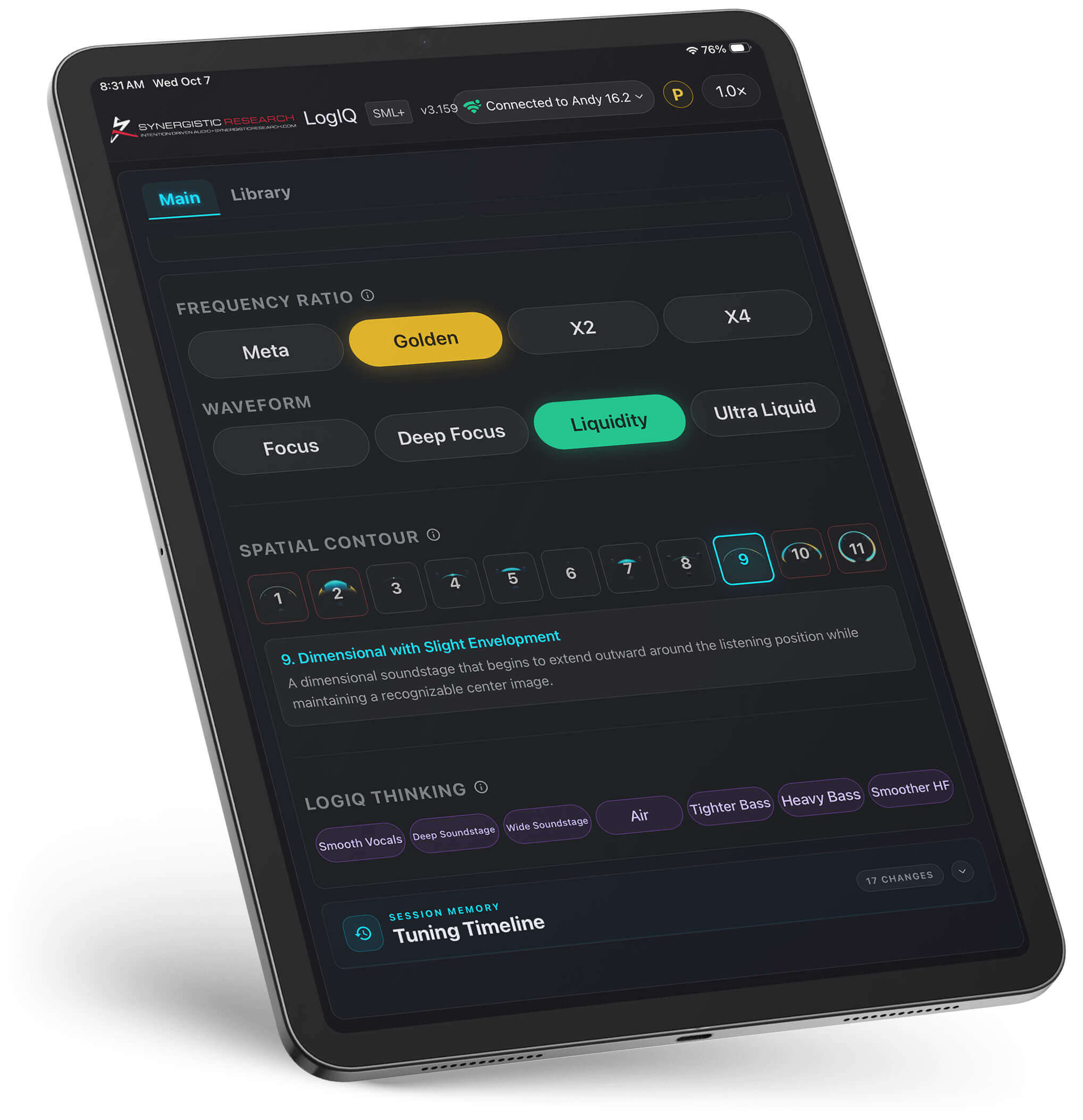
Manual Adjustment
Reach In and Set It Yourself
For the listener who wants direct control, LogiQ opens the field by hand. Frequency Ratio and Waveform decide which field LogiQ generates, from the smooth curve of a sine to the hard edge of a square or the ramp of a sawtooth. Spatial Contour shapes the stage itself: deeper, wider, or enveloping. This is where LogiQ stops choosing and you start.
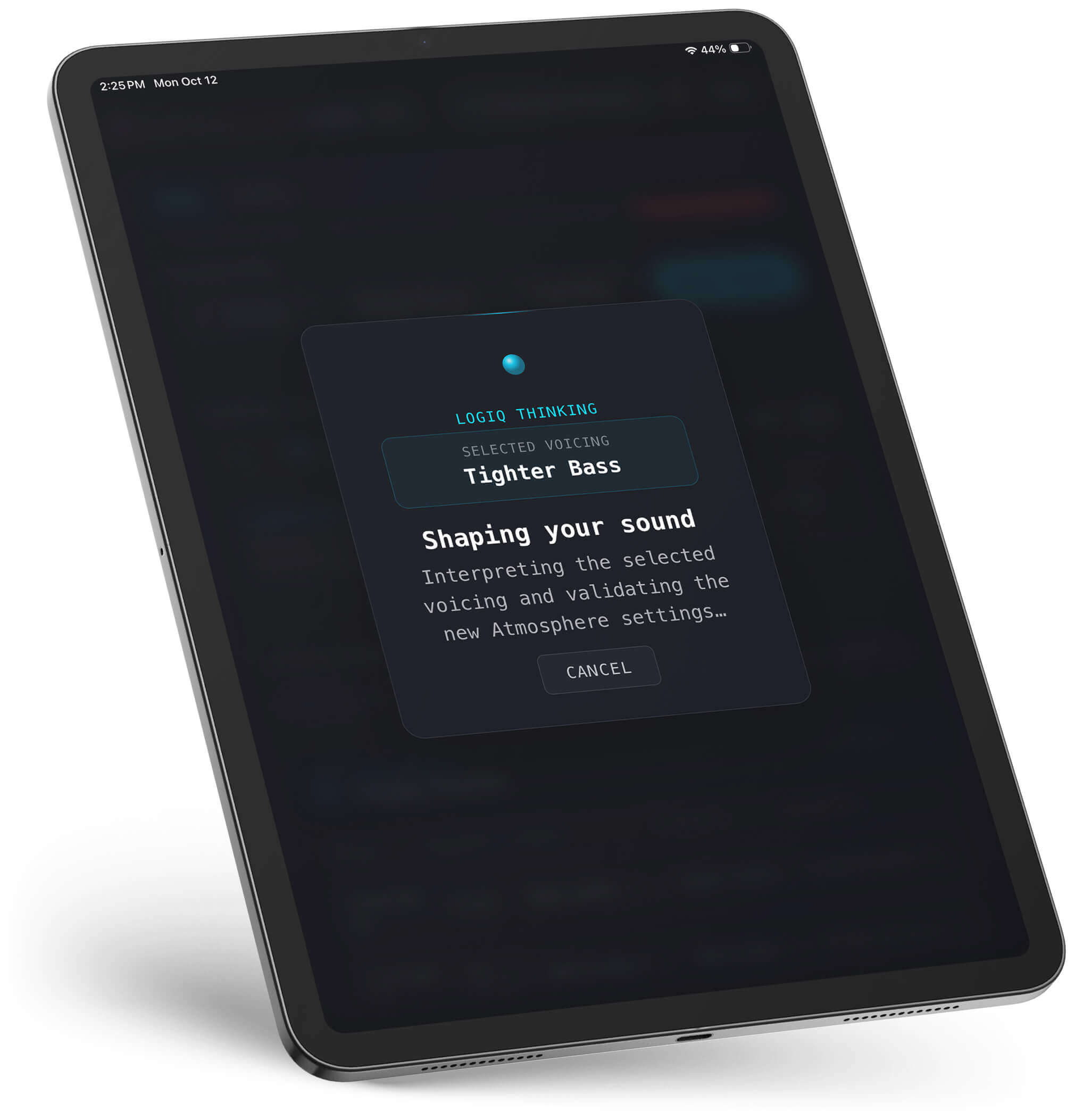
LogiQ Thinking
The More You Listen, the Less You Adjust
LogiQ Thinking is a model trained to understand more than a trillion field settings the way a listener does, predicting how any adjustment will move the stage. A second layer of software holds it to what it has actually learned rather than what it might guess. Then it learns you. Every scene you save reads as a preference, and over time LogiQ recalibrates from the factory starting points toward your taste.
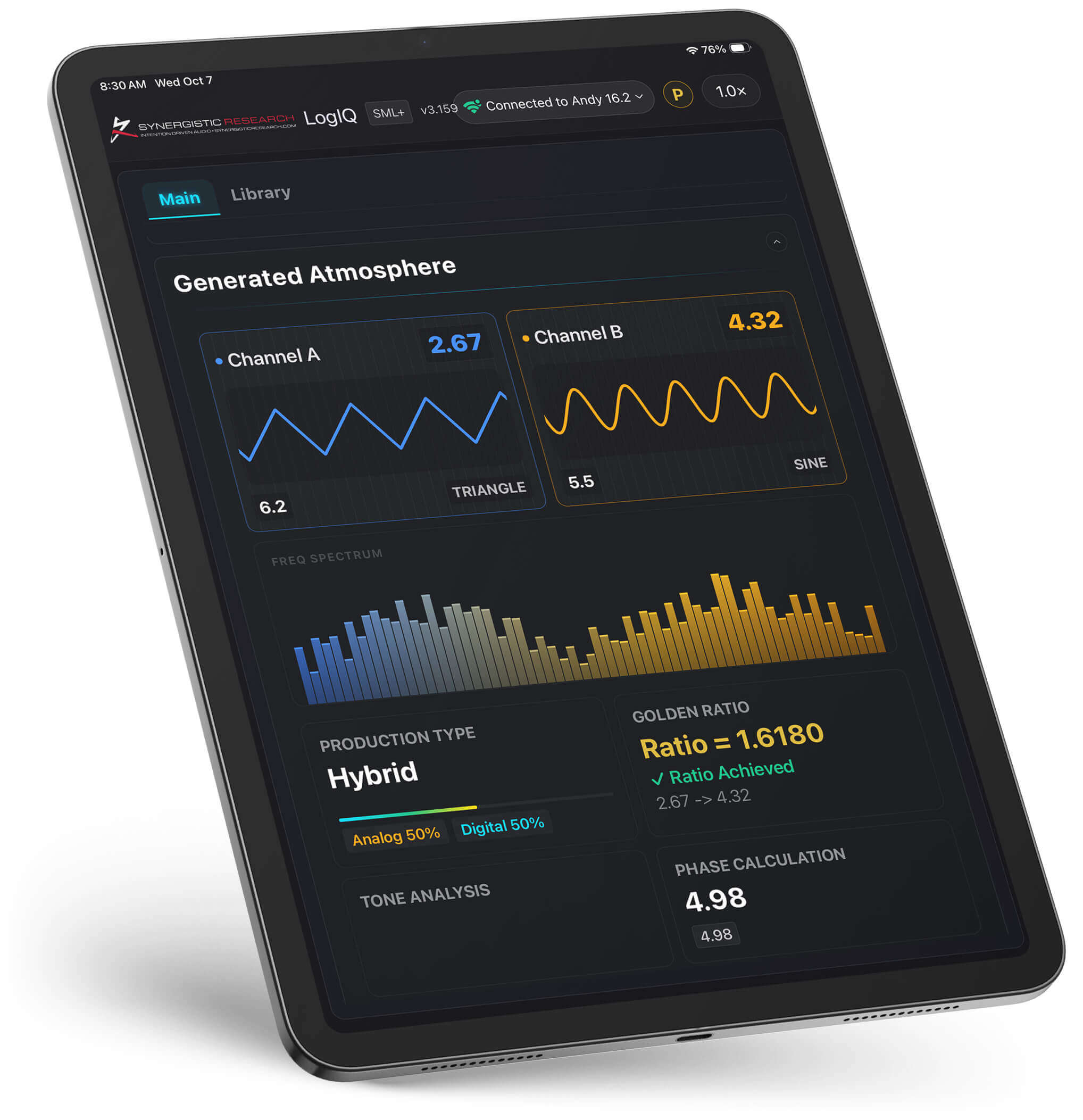
Generated Atmosphere
The Field, Made Visible
Generated Atmosphere draws the field LogiQ is producing as a picture on screen, built from the current frequency, waveform, and contour settings. When a setting changes, whether from Auto ID, a saved scene, or your own hand, the image changes with it. It does not measure your room. It shows what LogiQ is generating, so you can watch a voicing take shape while you hear it.
Source Conditioning
Other Servers Filter. This One Corrects.
Every streaming server is a computer, and every computer generates high-frequency switching noise as a byproduct of computing. The data arrives intact. The noise does not stay in the box. It leaves through your USB cable and power cord, couples into every conductor nearby, and compresses the depth and timbre of the music before it reaches your speakers.
The industry’s answer has been a better computer: faster processors, linear supplies, lower-jitter clocks, galvanic isolation. Each is a real improvement. None addresses the noise itself, because a better computer still computes, and filtering downstream treats the signal after the damage is done.
We approached the problem the way we approach a power line. The LogiQ Music Server shares its server hardware with our Quark Music Streaming Server, and with it the same patented Electromagnetic Cells we build into our PowerCell line conditioners and Active Ground Blocks, operating directly on its DC supply and computer circuitry. They do not filter. They project a coherent field that displaces the switching noise inside the chassis, before it can reach a single cable. No other streamer contains them.
Two more layers complete the architecture. A lower-power processing platform generates less noise to begin with, so the Electromagnetic Cells work from a quieter baseline. And an advanced ULF generator gives the signal a coherent low-frequency field to travel through, the way a ship rides the swell rather than the surface chop.
The noise is corrected where it begins. What reaches your cables is the music, not the machine.
Carbon Fiber Architecture
A Membrane, Not a Shield
Metal shielding would contain the server’s high-frequency noise and block the ULF field along with it. The carbon fiber top panel is selective. It is opaque to megahertz and gigahertz frequencies, so the noise stays inside where it is being corrected. It is transparent to ULF, so the field LogiQ sets reaches the SR cables and components around the server. The contamination stays in. The correction goes out.
Ground and Chassis
A Stable Reference in a Silent Chassis
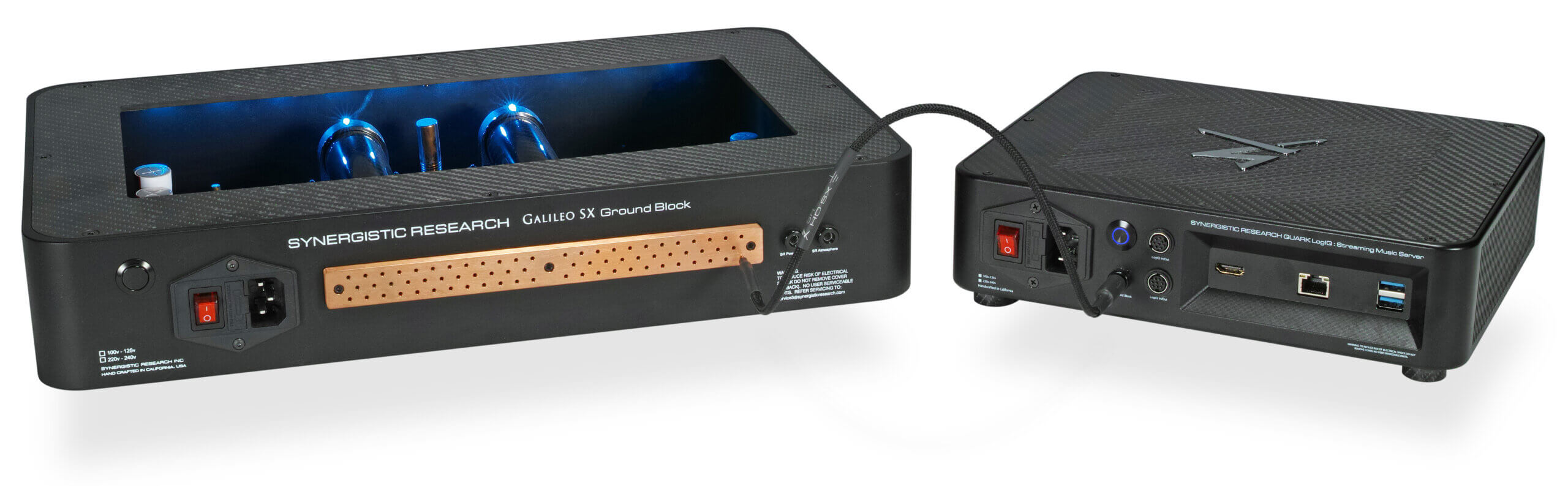
Digital timing margins are measured in picoseconds, so ground contamination an analog stage would pass unnoticed becomes jitter in a digital one. A multi-layer UEF ground plane holds a stable reference for the circuit, and a dedicated connection extends it to an Active Ground Block. The CNC-machined aluminum and carbon fiber chassis works as a passive heat sink, so the server runs fanless and adds no mechanical or acoustic noise to your rack or your room.
System Configuration
One Brain Across the System
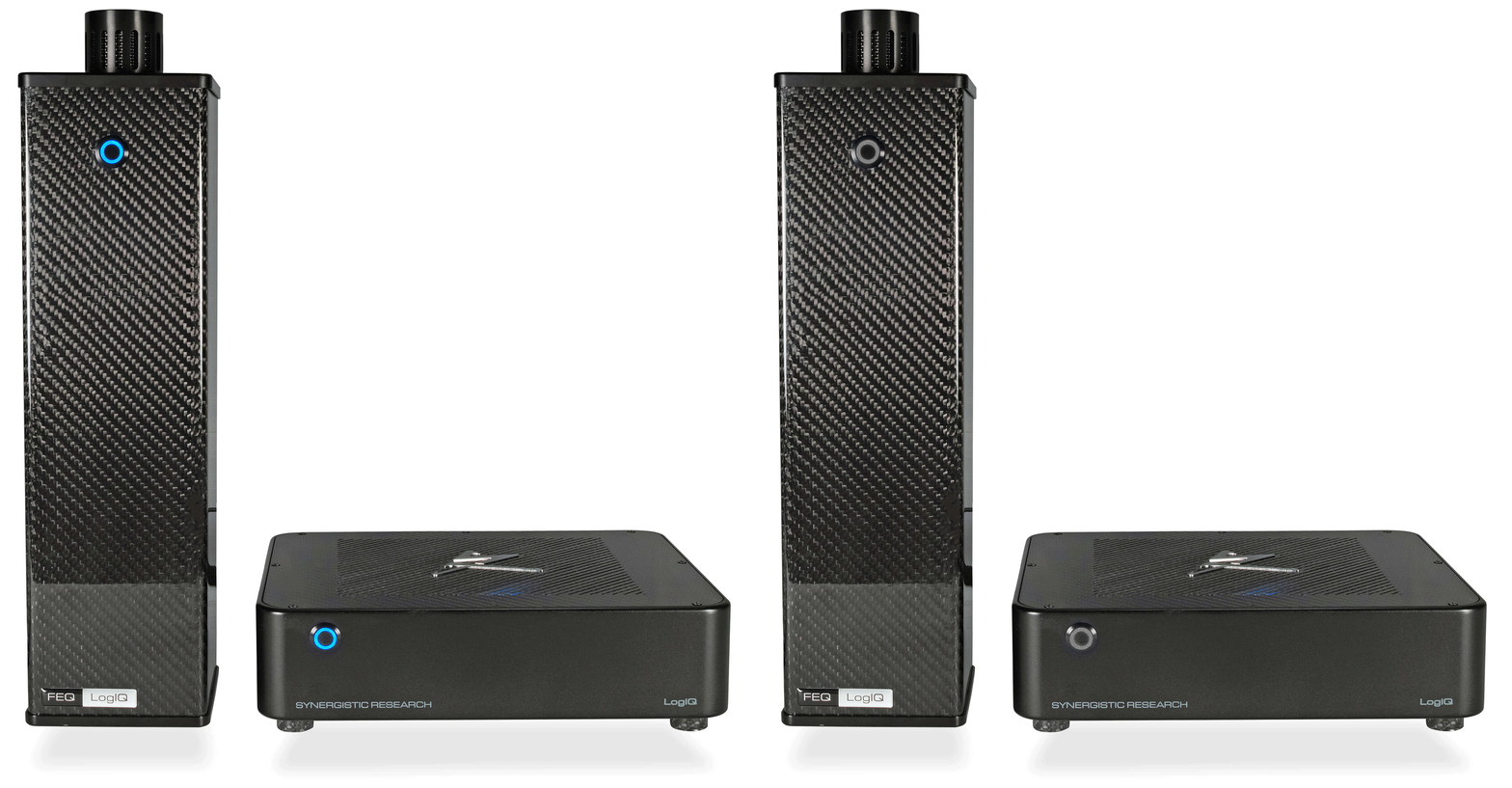
This is not a streamer with an app attached. It is the brain of a LogiQ system. The LogiQ Music Server and the LogiQ towers are two implementations of the same platform. The server works at the source, on the circuitry where digital noise begins. Atmosphere LogiQ and FEQ LogiQ broadcast a broader field across your entire system and its cabling. Each is complete on its own, and a system running both is where LogiQ is at its best.
Two LogiQ I/O ports connect the server to an Atmosphere LogiQ, an FEQ LogiQ, or a second LogiQ Music Server. Once they are linked, the server’s source circuitry and the field across your system are tuned to the same recording at the same moment.
That shared reference is what makes the combination more than additive. Voiced to the same ULF bias, the server’s conditioning and the tower’s field stop acting as independent variables, and their effects compound.

A second server also earns its place through Roon. You can run the LogiQ Music Server as Roon Core with a Quark or Voodoo as the endpoint feeding your DAC, or pair two LogiQ Music Servers linked through LogiQ I/O. Either way, library management and playback never share a processor. A Roon account is required.
Built on Our Six Pillars of Synergy

Power
A low-power platform and simplified supply reduce noise at its origin. The server ships with a Foundation XL 12 AWG power cable.

Grounding
A multi-layer UEF ground plane holds the circuit’s reference, and a dedicated connection extends it to an Active Ground Block.

Cabling
The carbon fiber panel passes the LogiQ-directed field to the SR cables around the server.

Acoustics
Through a connected Atmosphere LogiQ or FEQ LogiQ, the voicing Auto ID selects extends to the field across your system.

Mechanical Tuning
A fanless aluminum and carbon fiber chassis keeps vibration out of the circuit.

Electromagnetic Field Control
Electromagnetic Cells correct the field at the source, and a resident LogiQ brain sets the ULF environment to each recording as it plays.
How It All Comes Together

Synergistic Research LogiQ Music Streaming Server
MSRP
$10,495 110V
$11,495 230V
with included Foundation XL 12AWG Power cable ($995.00 Value)
and SR Holographic Fuse ($249.95 Value)
Dimensions – 2.75″h x 10″w x 8.25″d
Weight – 9 lbs.
Frequently asked questions.
Q. Does Auto ID LogiQ change my music?
A. No. The data stream leaves the server exactly as it was recorded. Auto ID changes only the ULF environment of the server’s own circuitry.
Q. Do I need an Atmosphere LogiQ or FEQ LogiQ?
A. No. The server is complete on its own, voicing its own source circuitry to each track. The towers work differently, broadcasting a broader field across your entire system and its cabling, so adding one extends LogiQ beyond the source rather than duplicating it.
Q. I already own an Atmosphere LogiQ or FEQ LogiQ. Why add the server?
A. Because it works where your tower does not: directly on the circuitry where digital noise begins. Linked through LogiQ I/O, the server and your tower are tuned to the same recording as each track plays.
Q. How does it relate to the Quark?
A. It shares the Quark’s server hardware and adds a resident LogiQ brain and two LogiQ I/O ports. Auto ID LogiQ, and the ability to direct linked LogiQ devices, are what the LogiQ Music Server adds.
Q. Can I pair it with a Quark or Voodoo?
A. Yes. Run the LogiQ Music Server as your Roon Core and a Quark or Voodoo as the endpoint feeding your DAC.
Q. What digital outputs are available?
A. Two USB input/outputs. One connects to your DAC, and the other can be used for external storage. The Ethernet connection also lets the server send network audio to another Roon endpoint, ideally a Voodoo or Quark.
Q. Is Roon the only interface?
A. Yes. The LogiQ Music Server comes ready to run Roon, and a Roon account is required. LogiQ is controlled through the LogiQ app.
Synergistic Research Streaming Music Server Reviews

“The Quark provided the finest digital sound quality that I have yet experienced in my listening room. The noise floor [in my system] has never been an issue or even noticeable in the past. But now, there was a blackness and a clean slate like never before. Vocals and instruments just seemed to jump out of the soundstage. There was a newfound level of clarity and definition, but not with all the added edge and ringing that can sometimes come along for the ride with this much detail.
Robert Youman, Positive Feedback, June 2026

Synergistic Research founder Ted Denney joins us at The Music Room for a first look at the new Synergistic Research Quark Music Server.
The Music Room, June 2026

Robert Taylor goes 3-for-1 in this review of the Synergistic Research Voodoo Streamer, SR Network Switch, and SR Router. Is there something more than magic going on in the sleek, stylish, Synergistic boxes, listen in to hear Robert’s thoughts.
Robert Taylor, The Absolute Sound, February 2025