



Holographic Fuse
The Playing Field Just Got Bigger.

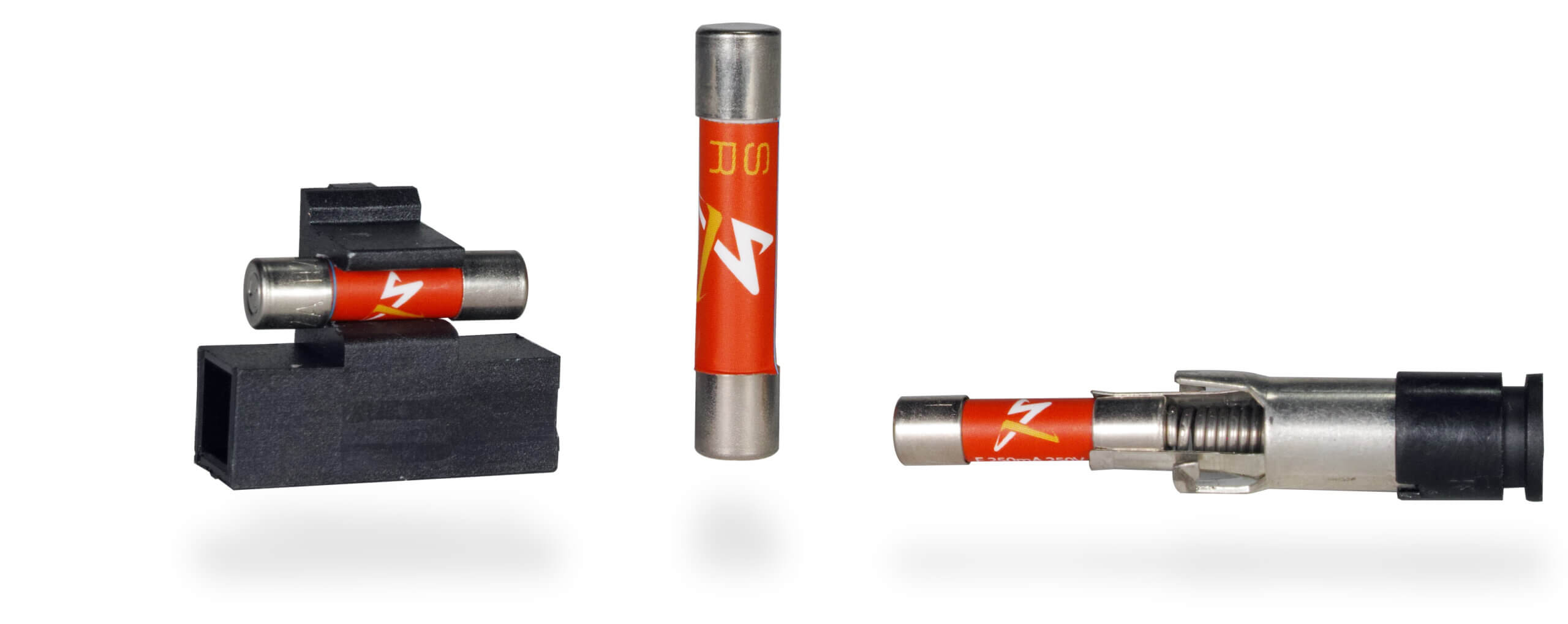
The largest soundstage of any fuse Synergistic Research has ever built. Born inside the Quark streamer server. Built with a UEF metamaterial that didn’t exist before. The foundation of the SR fuse architecture — paired with the Master Fuse at the leading edge for its complete expression in one or two applications, like your DAC or power amplifier.
Global MSRP
US $249.00
A Breakthrough Born Inside the Quark
We weren’t trying to build a better fuse — not at first.
We were trying to solve a specific problem inside the Quark streamer server — our most ambitious attempt to bring the performance of the Voodoo, our flagship streaming server, into a more accessible architecture. The Quark uses a lower-power CPU and motherboard than the Voodoo by design. That more modest computing platform generates its own MHz-GHz noise profile — and the gap between the Quark and the Voodoo needed to be bridged through field management rather than raw computing power.
The performance marker for Voodoo is specific. A huge analog soundstage. Absent the glare and edge that has defined digital sound for forty years. That was the target. That was what the Quark needed to approach.
To get there we needed a UEF metamaterial formulation more aggressive than anything we had developed before. We needed it to maximally affect the MHz-GHz contamination generated inside the Quark’s circuit — absorbing it before it could migrate outward and degrade the noise environment the analog stages operate inside. Working with a custom AI engineering system built on three decades of SR materials research and design principles, we developed a four-part compounded UEF metamaterial that we would not have arrived at through conventional material science alone. If we had reached it without AI assistance it would have taken many years.
When we applied that UEF metamaterial formulation to a fuse body — the Holographic Fuse was born.
What it Sounds Like
The Holographic Fuse throws the largest soundstage of any fuse Synergistic Research has ever made. In our reference system, the spatial envelope is roughly fifty percent larger than the Pink Fuse it replaces. That is a listening judgment made by the people who designed the product, in the room they designed it in, using ears that have been trained on this specific comparison for months. Not a subtle difference. A structural one.
SR fuses have always been known for holographic soundstage presentation. The Pink Fuse produced a genuinely three-dimensional image — with depth, width, and spatial resolution that distinguished it from everything else in the category. The Holographic Fuse takes that existing three-dimensional envelope and expands it by approximately fifty percent. The images that were already floating in space migrate outward into a significantly larger room. The decay extends further before it resolves. What the Pink Fuse did well, the Holographic Fuse does on a larger scale — with more air, more sense of physical space surrounding each image, more of the recording environment present in the listening room.
The resolution is high. But it never becomes etched. Never fatiguing. The detail is presented inside a large liquid space. The Pink Fuse by comparison was more pinpoint — tighter imaging, more leading edge definition, less liquid in its presentation, and in some systems capable of registering as fatiguing over extended listening. The Holographic Fuse is the opposite pole. Same resolution. Larger space. More liquid character. Zero fatigue. Musical and resolving simultaneously — the hardest combination to achieve and the one most fuses fail at.
Building Your Fuse Loom
Four starting points. One architecture. Every path below is protected by SR’s 30-day no-risk money-back guarantee. Audition it in your system. Take it as far as the system suggests.
If you’re starting fresh
Run Holographic Fuses everywhere. Every component. Every position. That is the simplest and most complete expression of what the Holographic Fuse architecture can do — the largest soundstage, the most air and decay, the most liquid presentation of resolution across the entire system simultaneously.
After listening, if you want more resolution and leading edge definition at the front of the signal chain — add one Master Fuse. In a digital system place it in your DAC. In an analog system place it in your phono stage or power amplifier. Everything else stays Holographic. The Master provides the leading edge anchor. The Holographic provides the spatial foundation the rest of the system operates inside.
If you have non-SR fuses in your system
Non-SR fuses are the positions where the SR UEF Metamaterial architecture is not yet operating. Replacing them is the largest available improvement anywhere in the SR fuse lineup — larger than any upgrade between SR generations.
Start with one Holographic Fuse in your DAC, pre-amplifier or amplifier. The change will be immediate and structural. A larger soundstage. More air and decay. More liquidity. Resolution without fatigue. Add more Holographic Fuses one position at a time — the system will tell you when it’s right.
Once every non-SR fuse has been replaced with a Holographic — consider adding a Master Fuse at the front of the signal chain. In a digital system place it in your DAC. In an analog system place it in your phono stage or power amplifier. One Master at the leading edge. Holographic everywhere else. That’s the endpoint the system builds toward.
If you have a Pink Fuse loom
The Holographic Fuse replaces the Pink Fuse as the foundation of the SR fuse architecture — larger soundstage, more liquid, more musical, zero fatigue.
Keep the Pink Fuse on your DAC. Start with one Holographic Fuse downstream — your preamplifier, your amplifier, or any component away from the leading edge of the signal chain. Any application will exhibit the defining characteristics of the Holographic Fuse — a larger soundstage, more liquidity, more musicality, resolution without fatigue. Add more Holographic Fuses downstream one position at a time. With each addition the presentation grows larger and more musical. When to stop is determined entirely through your own listening.
The 30-day no-risk money-back guarantee means every step is risk free.
When you’re ready to go further — replace the Pink Fuse on the DAC with a Master Fuse. The Master does what Pink does in that position, but better in every way. One Master at the front of the signal chain. Holographic everywhere else. That’s the endpoint the system builds toward.
If you have a Master Fuse plus Pink and Purple Fuses
Purple comes out first. The gap between Purple and Holographic is the largest in the lineup — the improvement will be dramatic while preserving what it is you love about the Purple fuse — namely musicality with improved sound stage scale. Replace every Purple Fuse with a Holographic before touching the Pink Fuses already in the system.
Once the Purple Fuses are out, audition Holographic Fuses in the positions currently occupied by Pink — one position at a time, using the 30-day guarantee — until you have found the balance that best expresses the Holographic Fuse’s spatial and musical character in your specific system. Your Master Fuse stays where it is. It remains the leading edge anchor. The Holographic Fuses build the spatial architecture around it.
Every path through the SR fuse lineup converges on the same architecture — one Master Fuse at the leading edge, Holographic Fuses everywhere else. That’s the SR fuse architecture in its complete form. The exact balance is something your room and your ears decide.
The Voicing Principle
Every system is different. Every room is different. Every combination of components produces a different electromagnetic field environment that the UEF metamaterial fuse architecture operates inside. The 30-day no-risk money-back guarantee exists precisely because the right balance is something the system reveals through listening — not something that can be specified in advance from the outside.
The principle is consistent across every system and every upgrade path. More Master Fuses — more analytical, more leading edge, more definition and grip. More Holographic Fuses — more spatial, more liquid, more musical, more air and decay into space.
Move in either direction until the system stops sounding like gear and starts sounding like music.
That’s the point at which the voicing is right.

View Terms
30-Day Money Back Guarantee products must be purchased through a participating Authorized Dealer. A valid proof of purchase from the Authorized Dealer is required. Products must be returned in like-new condition, including all original packaging, accessories, and documentation. Items showing signs of wear, misuse, damage, or missing components may not be eligible for return. Custom orders, discontinued products, consumables, and accessories may be excluded from this guarantee. To request a return, customers must contact the Authorized Dealer from whom the product was purchased within 30 days of the purchase date. Returns not meeting the like-new condition requirement may be refused or subject to restocking or refurbishment fees. Eligibility for return will be determined by the Authorized Dealer in its sole discretion, and such determination is final. Customers are responsible for all shipping costs, including shipping to and from the Authorized Dealer, unless otherwise stated in writing by the Dealer.
We’re so sure you’ll love what the SR Holographic and Master fuses do for your system, we sell them with a no questions asked, 30-day money back guarantee so you can audition SR Fuses in your system risk-free. Then if you’re not 100% satisfied with your system’s performance on SR Holographic and Master fuses, return the fuses to your dealer in like new condition for a full refund.
Holographic Fuse
Available Values:


5mm x 20mm Slo-blow
5mm x 20mm Fast-blow
100mA
160mA
200mA
250mA
315mA
500mA
630mA
800mA
1A
1.25A
1.6A
2A
2.5A
3.15A
4A
5A
6.3A
8A
10A
12.5A
16A
50ma
160mA
200mA
250mA
500mA
800mA
1A
1.6A
2A
2.5A
3.15A
4A
5A
6.3A
8A
10A
12.5A
16A
6.3mm x 32mm Slo-blow
6.3mm x 32mm Fast-blow
250mA
500mA
800mA
1A
1.6A
2A
2.5A
3.15A
4A
5A
6.3A
8A
10A
12.5A
15A
16A
20A
250mA
500mA
800mA
1A
1.6A
13A UK Main
2A
2.5A
3.15A
4A
5A
6.3A
8A
10A
12.5A
15A
16A
20A
Frequently asked questions.
Q: Are fuses directional?
A: Yes, fuses are directional. Electricity should flow from the left to the right when you view the fuse. If you do not know the direction of flow you should listen to the fuse inserted in both directions. One direction will sound more detailed. This is the correct way.
Q: Do fuses have a burn in period?
A: Yes, most products have a settling in period. The first 200-300 hours of use are the most crucial.
Q: Where should I use my Master fuse(s)?
A: To get the most out of our Master Fuses, we suggest starting with one or two fuses in most systems, and possibly more for highly resolving systems. There is no “wrong” component to start with; however, we typically recommend starting “upstream,” at the beginning of your signal source (Music Streamer, CD Player, Turntable, Reel to Reel, etc.). From there, we suggest moving on to your digital-to-analog converter or phonostage (if you use one), followed by your preamplifier and then your power amplifier. If you have multiple sources, upgrading the fuse in your preamplifier first can improve the performance of all of your sources.”
Fuse Reviews

I’d like to thank you once again for giving me the opportunity to evaluate it in my system. I always enjoy hearing your latest developments and discovering the direction Synergistic Research is taking.
I have to say, every time I think you’ve reached the limit of what’s possible, you somehow manage to raise the bar once again. It’s genuinely impressive how every new generation brings meaningful improvements rather than just subtle changes. That’s one of the reasons I always look forward to trying your new products.
The first thing that immediately caught my attention after a few days was the increase in dynamic expression together with the remarkable resolution in the upper bass and deep bass. The entire presentation became noticeably more holographic. Everything sounds smoother, more organic, and more effortless. There is significantly more air between individual notes, instruments, and voices, allowing the music to breathe in a very natural way.
What impressed me even more was the improvement in depth. It isn’t just the soundstage that becomes deeper—the performers and instruments themselves gain real three-dimensional body. Voices, guitars, and even the smallest musical details have a physical presence that makes them feel more tangible and lifelike. That additional sense of dimensionality is, to me, one of the biggest improvements in overall realism.
I was equally impressed by how much larger the soundstage became while still preserving the coherence and holographic integrity of the presentation. That’s a very difficult balance to achieve, and in my opinion you’ve done an outstanding job.
When I switch back to the Purple Fuse, the differences become immediately obvious. The Purple sounds a little more aggressive in the upper frequencies and not quite as refined or effortless. Going back really highlights how far the new fuse has progressed.
Because of that, I’d eventually like to install two of the new fuses in my Gryphon Scorpio as well. At the moment, I’m mixing different fuse generations throughout my system, and I feel that the overall musical flow has suffered slightly. That’s something I’ve noticed before: whenever different fuse generations are combined, a little of the natural coherence disappears. I believe a complete system equipped with the new generation would unlock even more of its potential.

The Holographic fuse will make your system more holographic. It is aptly named, and it is, by definition, a coloration. Your system will sound different. It is not so much a change of wet or dry, but rather it enhances the flow of the music, bringing out not just a greater sense of space, but also rhythm. There was an increase in resolution that clarifies the music, but it is not analytical. Rather, it invites you into the music by lowering the effort it takes your brain to interpret it. Lyrics come more naturally, almost making you beg for another verse. For those who seek an absolute sound, consider what your music would sound like if it were recorded in a different studio, mixed by a different engineer, played live in a different venue, or outdoors in a different arena.
Rick Becker, Enjoy The Music, September 2026

“The Synergistic Research Quantum Pink Fuse was placed in my Otari MX5050 Tape Deck, This vintage reel to reel tape deck was completely overhauled and has been operating in my audio system for 2 years now. I am a huge fan of analog tape due to what I feel emits a more natural sound.. With the addition of the SR Pink Fuse the tape recordings have moved closer to what I have experienced at live events. Since the addition of the SR Pink Fuse the tape recordings sound more natural, with crystal clear clarity, 3D sound depth, and increased resolution. I have always been a fan of Synergistic Research Quantum fuses, as I have used them throughout my audio system over the years. I highly recommend their Master and Pink fuses, they are reasonably priced and perform beyond expectations. A must have for every audio system. “
Moreno Mitchell, Stereo Times, July 2024