



Quark Music Streaming Server
The Smallest Particle Carries the Greatest Force.
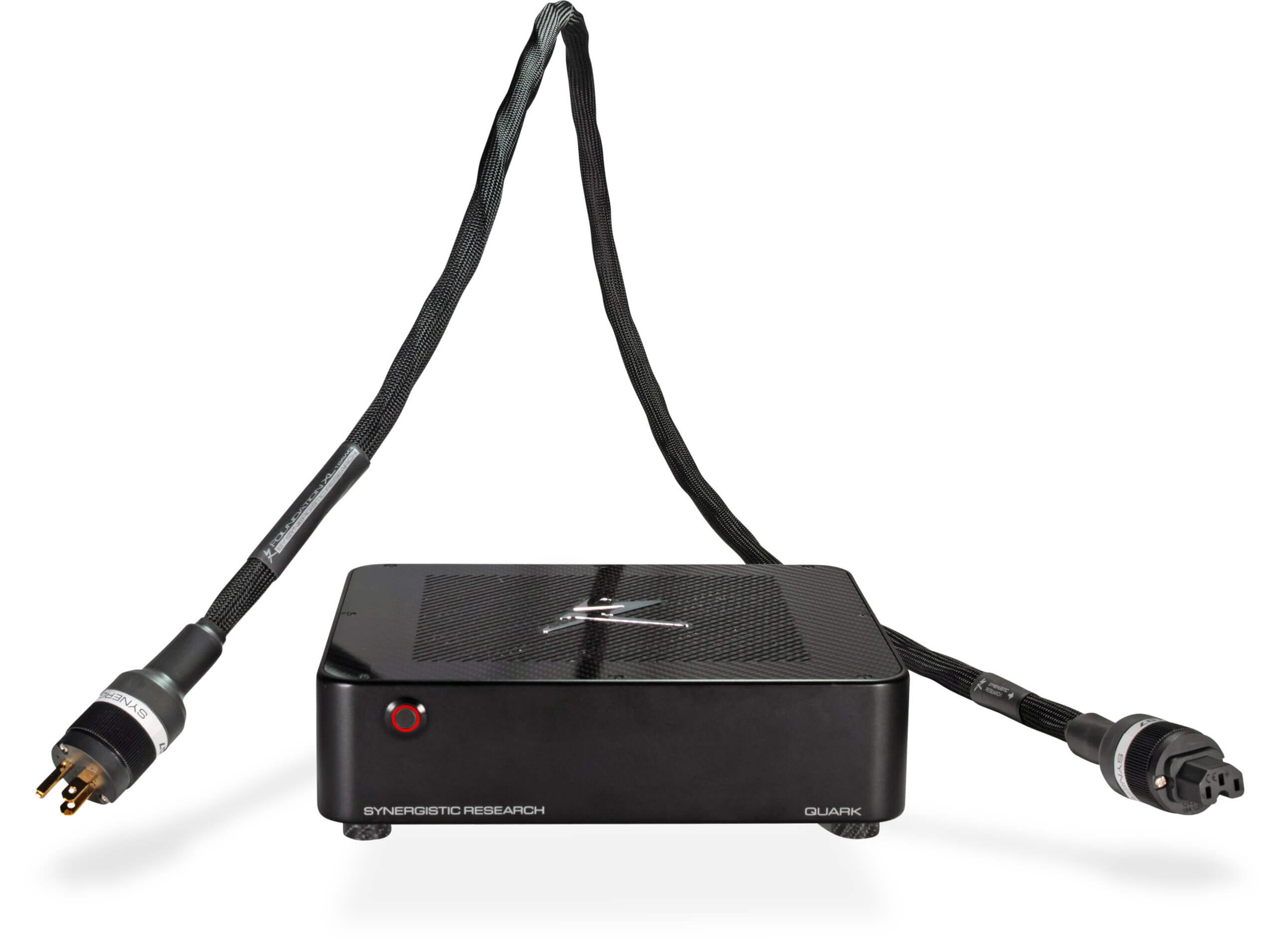
Quark is the first streaming server engineered from the ground up to eliminate the one problem every other streamer ignores: the high-frequency electromagnetic contamination generated by its own computing architecture.
It inherits the full Synergistic Research field technology stack developed for the flagship Voodoo — electromagnetic cells, ELF/ULF biasing, UEF metamaterials, and carbon fiber architecture — refined across fifteen years of power conditioning, grounding, and digital infrastructure engineering, and transferred into a compact, low-power platform that delivers performance $30,000 competitors cannot match. Not because it’s a better computer. Because it solves a problem they don’t know exists.
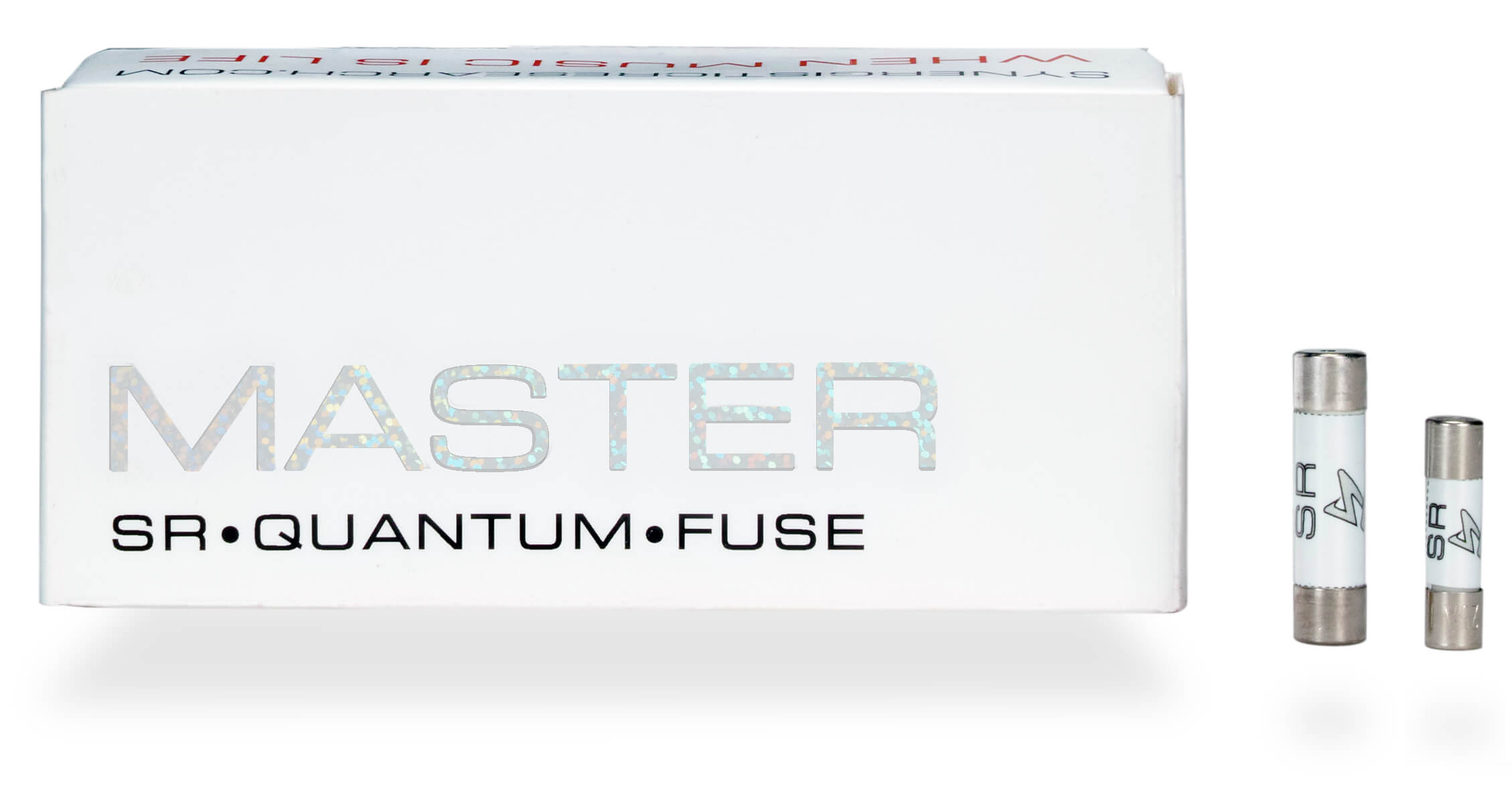
Quark ships with a Foundation XL 12 AWG power cable and SR Master Fuse.
The Hidden Enemy in Digital Audio
Your Streamer Isn’t Just Playing Music. It’s Broadcasting Noise Into Every Cable in Your System.
Every streaming server is a computer. Every computer operates on chips — CPUs, RAM, voltage regulators, integrated circuits — that switch at MHz-GHz frequencies. That switching generates broadband electromagnetic noise as a direct, unavoidable byproduct of computation.
The digital data isn’t the problem. The ones and zeros arrive intact. The noise doesn’t corrupt the file. It does something worse.
It leaves the streamer.
It exits through the digital cable connecting the streamer to your DAC. It exits through the power cord connecting the streamer to your power conditioner or wall outlet. And once it’s on those cables, it doesn’t stay on those cables. It radiates into the electromagnetic field surrounding every conductor in proximity — your analog interconnects, your speaker cables, your power cords, every cable in the loom. One cable to the next. The noise migrates through electromagnetic coupling from the digital source into the analog signal chain — without any galvanic connection between them.
This is where the damage happens.
When MHz-GHz noise rides on a cable carrying your analog audio signal, it reshapes the propagation pattern of that signal. The audio waveform and the contaminating noise share the same conductor. They share the same electromagnetic field. The noise doesn’t sit alongside the music as a separate artifact you can filter out downstream. It superimposes itself on the field the music propagates through — compressing the phase relationships that encode soundstage depth, altering the harmonic structure that encodes timbral accuracy, collapsing the spatial information that tells your brain where every instrument sits in three-dimensional space.
This is what the world has been calling “digital sound” for over forty years.
The compressed presentation. The flattened soundstage. The hardness in the upper frequencies. The sense that digital is accurate but not alive — technically correct but missing the ease, the depth, the three-dimensionality that analog listeners have always claimed as vinyl’s advantage.
It was never the format.
It was never the ones and zeros. It was never sampling versus continuous waveform. It was never the DAC chip or the reconstruction filter or the bit depth.
It was the frequencies that digital chips operate at — MHz-GHz switching noise generated inside the streamer, migrating outward through every connected cable, jumping to every adjacent conductor through electromagnetic coupling, and reshaping the analog waveform your speakers ultimately reproduce. The contamination doesn’t come from the recording. It comes from the machine playing the recording.
For forty years, the audio industry has treated this as an inherent limitation of the digital format. It isn’t. It’s a contamination problem with a specific mechanism and a specific origin point — and it has a specific solution.
Eliminate the noise inside the streamer before it ever reaches the cables. Before it migrates to the analog chain. Before it reshapes the waveform your speakers reproduce. Solve it at the source — and digital doesn’t sound like better digital.
It sounds like music.
That’s Quark.
Circuit Architecture
The Problem Was Never the Computer. It Was What the Computer Generates.
The streaming server industry has spent a decade optimizing the computer. Better motherboards. Better processing platforms. Linear power supplies replacing switch-mode supplies. Every optimization produces real improvement — and every optimization leaves the fundamental problem untouched.
The fundamental problem is this. Every CPU cycle, every RAM access, every voltage transition on every integrated circuit inside the machine generates broadband MHz-GHz switching noise. That noise radiates into the electromagnetic field environment inside the chassis — the same field environment the audio signal propagates through on its way to your DAC and outward through every connected cable.
A $30,000 streamer with a superior motherboard, superior power supply, and superior clocking still generates this noise. It generates less of it. It never eliminates it. And because the noise rides on the field — not on the wire — no amount of downstream filtering, galvanic isolation, or USB reconditioning can fully separate the contamination from the signal. The contamination and the signal share the same field. They exit the machine together. They reach your analog cables together.
Quark’s low-power architecture reduces the noise at the source. A simplified motherboard and lower-power processing platform draw less current, generate less heat, and produce less broadband switching noise than the high-performance computing platforms competitors use. This isn’t a compromise. It’s the same conclusion every serious digital audio engineer has reached — the quietest server is the one that computes the least.
But reducing the noise is step one. Eliminating its influence on the signal — and preventing it from migrating outward into the rest of your system — is step two. That’s where the SR technology stack begins.
ULF Generator
Reshaping the Field Your Signal Travels Through.
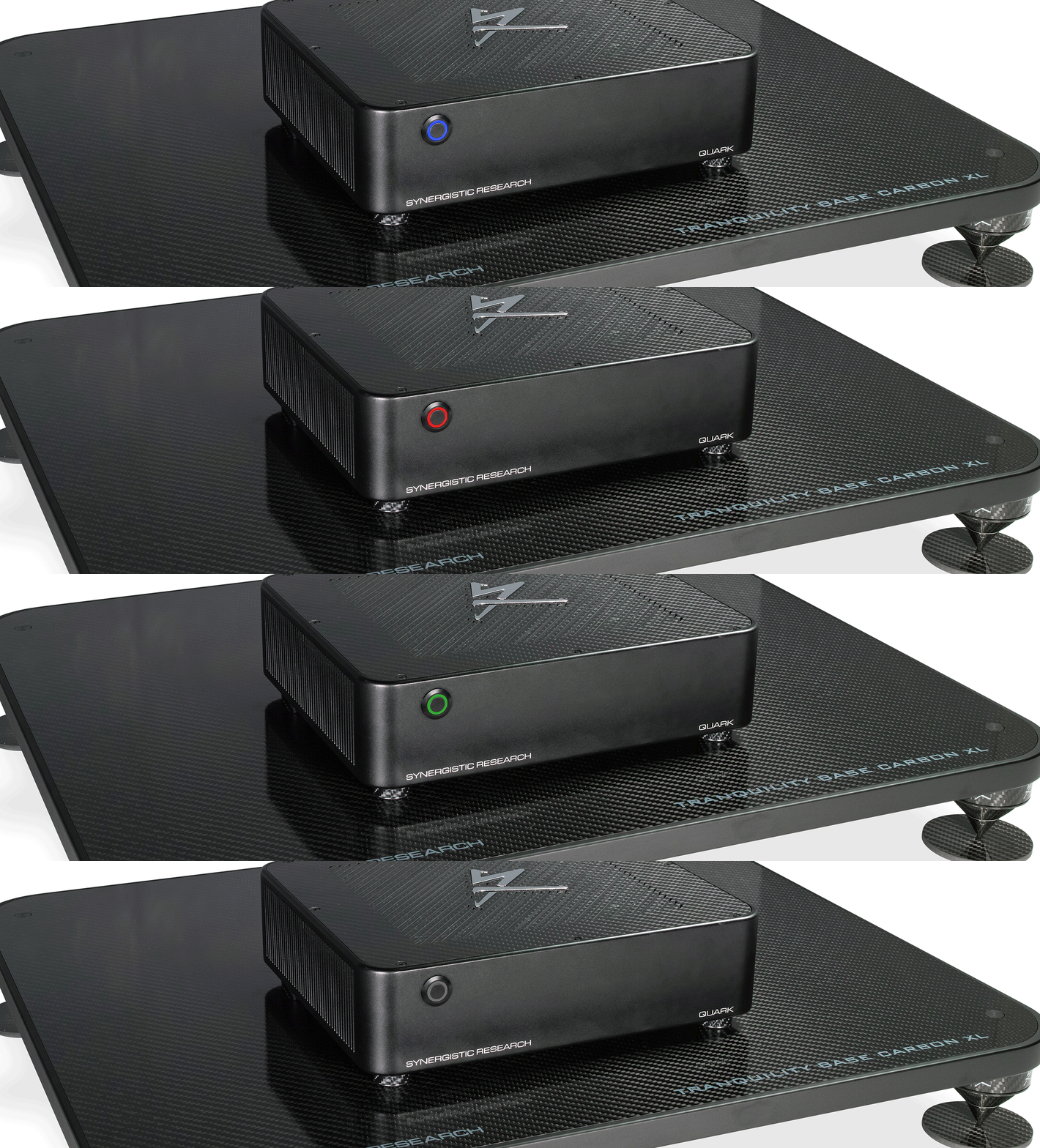
Quark features an advanced ELF/ULF biasing system — evolved from the implementation in the flagship Voodoo — that generates a coherent low-frequency electromagnetic field inside the chassis.
The principle is straightforward. Your home is saturated with MHz-GHz noise from Wi-Fi routers, LED lighting, switch-mode power supplies, smartphones, and dozens of broadband emitters that didn’t exist twenty years ago. That noise rides on every conductor in your system. The audio signal’s phase relationships and harmonic structure propagate through that contaminated field — and arrive at your speakers with the spatial and timbral information compressed, smeared, and degraded.
ELF/ULF biasing doesn’t remove the MHz-GHz contamination. It establishes a coherent field structure that the audio signal couples to preferentially — the way a ship rides the ocean swell, not the surface chop. The contamination is still present. The signal’s relationship to its field environment changes — from riding the chop to riding the swell.
Three selectable ULF frequencies let you voice Quark to your system, your room, and the music you’re listening to.
Blue (Default): Linear note transitions from low to high frequencies with a relaxed midrange. Large, enveloping soundstage. The natural starting point for most systems and recordings.
Green: Slightly more forward midrange presence with added bass weight. Systems that benefit from additional warmth and density respond here.
Red: Optimized for recordings mastered with significant phase information and holographic soundstaging. Electronic, ambient, and large-scale orchestral recordings take on three-dimensional depth that borders on surreal.
These settings don’t color the music. They don’t alter the data stream. They reshape the ambient electromagnetic field environment surrounding the circuit. The difference is immediate.
Electromagnetic Conditioning
The Technology No Other Streamer Contains.
Inside Quark’s chassis, the same patented electromagnetic cell technology deployed across the PowerCell line conditioners, Active Ground Blocks, and the flagship Voodoo operates directly on the internal DC power supply and computer circuitry.
Electromagnetic cells don’t filter noise from the signal. They reshape the electromagnetic field environment the signal propagates through — projecting a coherent field that displaces the incoherent MHz-GHz contamination generated by the computing architecture. The distinction matters. Filtering removes noise after the damage is done. Field correction prevents the damage from occurring. And critically — field correction inside the chassis means the contamination is neutralized before it ever reaches the cables connecting Quark to the rest of your system.
This is the technology that separates Quark from every streaming server at any price point. Not better filtering. Not better isolation. A fundamentally different approach — managing the field environment at the point of origin so the signal exits the machine clean, and the noise that would otherwise migrate to every cable in your system stays contained and neutralized inside the chassis.
Fifteen years of development across power conditioning, grounding, and digital infrastructure produced this technology. Quark inherits all of it.
Carbon Fiber Architecture
The Semi-Permeable Membrane That Keeps the Noise In and Lets the Correction Through.
A semi-permeable membrane is a barrier that selectively passes certain things while blocking others. Your cell walls do it with molecules. Carbon fiber does it with electromagnetic frequencies.
Carbon fiber is universal across every SR product — cables, power conditioners, ground blocks, acoustic devices, and streaming servers. It isn’t decorative. It’s functional. And in Quark, it plays a role no conventional chassis material can.
Quark’s carbon fiber top panel is opaque to MHz-GHz frequencies — the broadband switching noise generated by the CPU, RAM, and integrated circuits inside the chassis. That noise, which would otherwise radiate outward through the chassis and contaminate every cable and component in proximity, is blocked. It stays inside. It never reaches your analog interconnects, your speaker cables, or the other components on your rack. The carbon fiber acts as a containment barrier for the very contamination the electromagnetic cells and ULF generator are neutralizing internally.
At the same time, carbon fiber is transparent to ELF/ULF frequencies — the coherent low-frequency biasing field that the ULF generator produces and that every SR metamaterial in your system is engineered to receive. The correction passes through. The contamination does not. The biasing field reaches your cables, your power conditioner, your ground block — every SR product in the system couples to the coherent field environment Quark’s ULF generator broadcasts. The noise stays locked inside the chassis where it’s being neutralized. The beneficial field radiates outward to the rest of your system.
Conventional metal shielding can’t do this. Metal blocks everything — the noise and the biasing field alike. A metal chassis would contain the MHz-GHz contamination but would also block the ELF/ULF correction from reaching the rest of the system. Carbon fiber’s selective permeability is the engineering that makes the entire technology stack work as an integrated system rather than isolated components.
Carbon fiber also breaks up mechanical vibration that causes capacitance shifts in conductors, maintains capacitive continuity across the chassis, preserves phase information, and dissipates heat without active cooling. One material. Multiple functions. The connective tissue that unifies every SR product into a coherent engineering framework.
Ground Architecture
The Reference Point Everything Else Depends On.
Ground is the electromagnetic reference the entire system operates within. A compromised ground reference compromises everything downstream — timing accuracy, spatial coherence, tonal resolution, low-level detail retrieval. Digital circuits are especially vulnerable because the timing margins are measured in picoseconds. Ground-plane contamination that would be inaudible in an analog circuit produces measurable jitter and spatial degradation in a digital one.
Quark addresses this with multi-layer UEF ground plane technology working in concert with the electromagnetic cells to establish a clean, stable reference point for the entire digital circuit. The low-power architecture compounds the advantage — less current draw means less internally generated noise flowing through the ground path, giving the ground plane technology a quieter foundation to operate within.
The result is one of the blackest backgrounds we’ve achieved in a digital component at any price. Low-level detail and spatial cues that typically remain buried beneath the noise floor emerge into audibility — not because the signal got louder, but because the noise floor beneath it dropped.
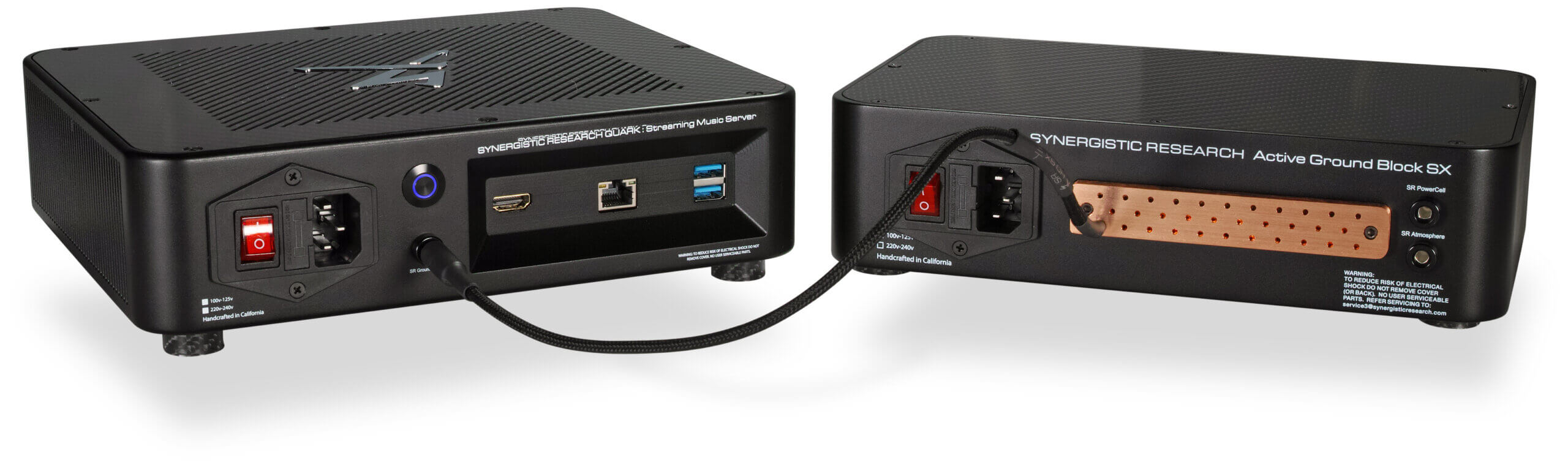
For even greater performance, Quark connects to a Synergistic Research Active Ground Block through a dedicated ground connection — extending the ground architecture into your broader system topology and lowering the noise floor further.
Software Platform
Built for Roon. Designed for Flexibility.

Quark runs Roon software, delivering a metadata-driven listening experience with intuitive library management, artist biographies, lyrics, and seamless integration with Qobuz, Tidal, and local file libraries. A Roon account is required.
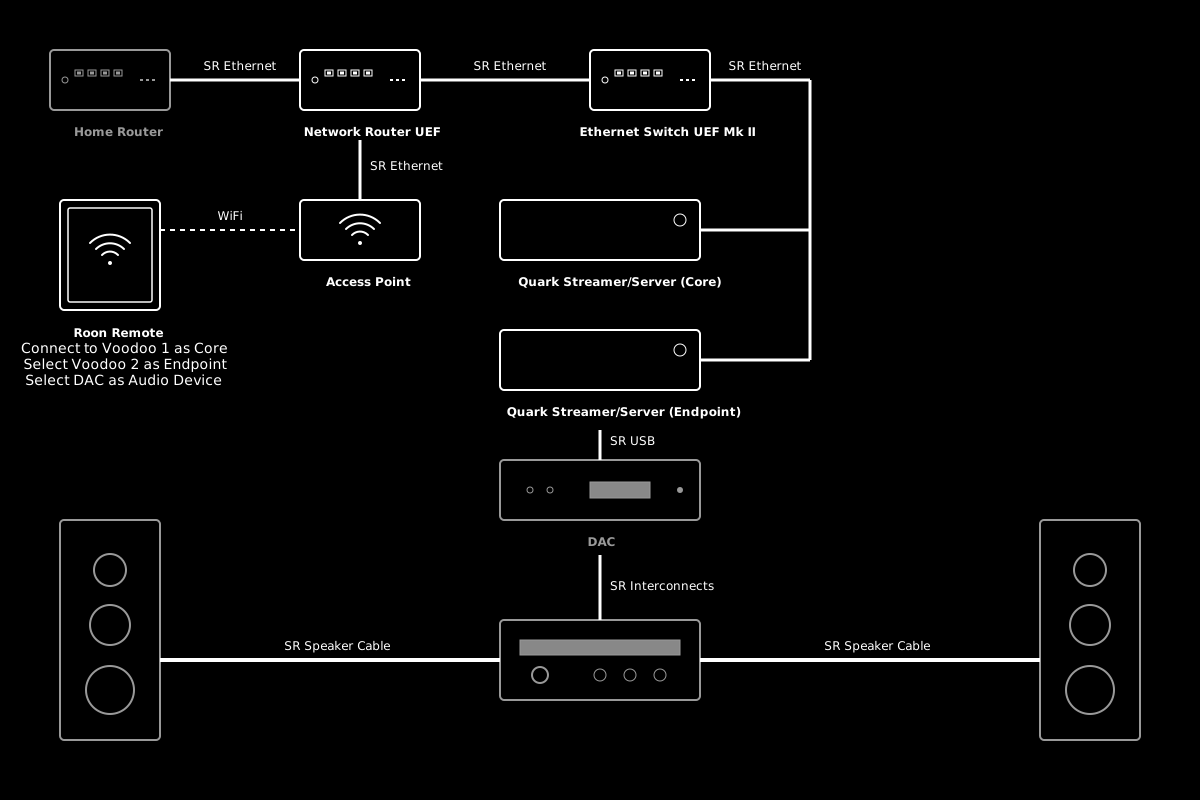
For the highest possible digital audio quality, pair a Quark with a Voodoo or a second Quark — dedicating one unit as the Roon Core Server and the other as the Roon endpoint. Separating core processing from audio output eliminates the sonic penalties of running both functions on a single device. Each unit focuses exclusively on its task. This dual-server architecture is the same approach used in the flagship Voodoo configuration. Quark makes it accessible at a fraction of the investment.
Mechanical Architecture
Compact by Design. Silent by Engineering.
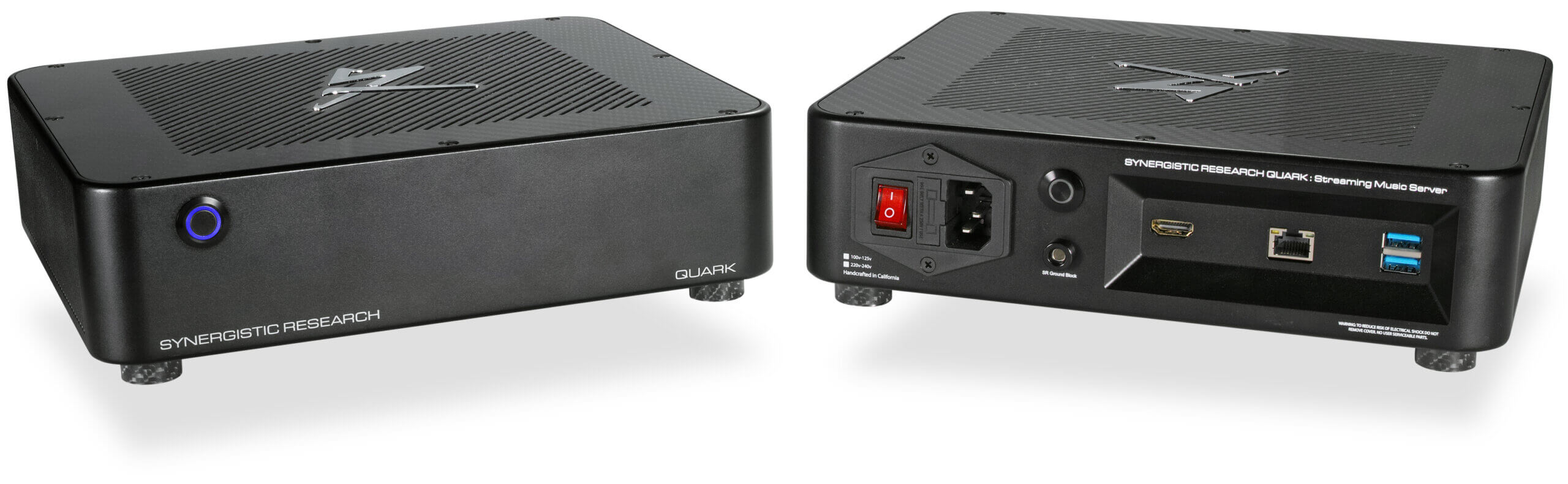
Quark takes form in a compact chassis machined from the same low-resonance materials found across Synergistic Research’s active component line. CNC-machined aircraft aluminum and carbon fiber eliminate vibrational feedback between chassis and circuit, while the entire enclosure acts as a passive heat sink. No fans. No moving parts. No acoustic interference with your listening environment.
The compact form factor isn’t aesthetic. It’s a direct consequence of the low-power architecture. A processor that draws less power generates less heat. Less heat means a smaller chassis maintains the same thermal headroom as the full-size Voodoo. Every dimension serves the engineering.
System Configuration
Stronger Together.
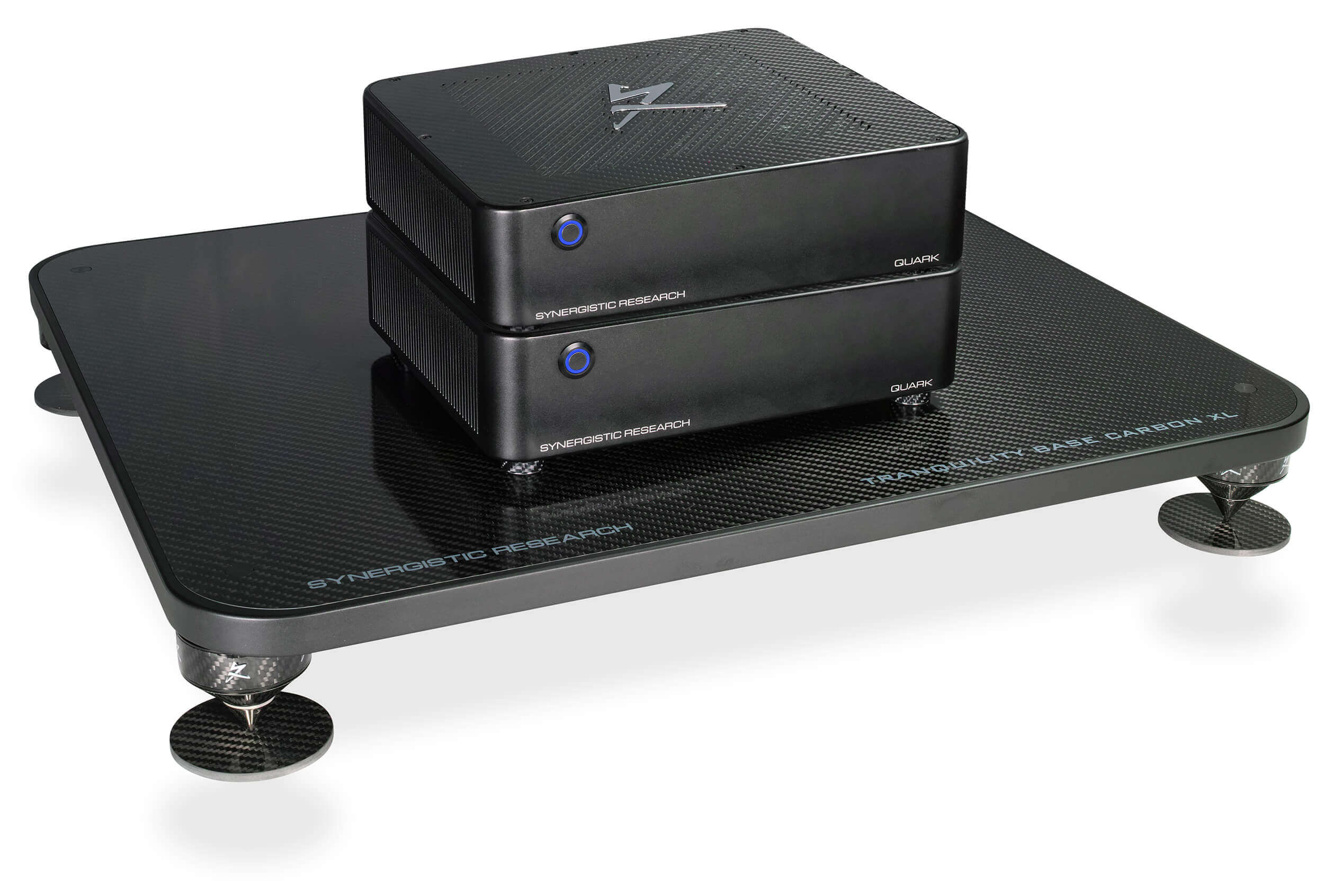
Quark is engineered to perform as a standalone streaming server. It’s also engineered to scale.
Quark + Voodoo.
Use the Voodoo as your Roon Core Server and the Quark as your dedicated endpoint. The Voodoo handles library management and processing while the Quark focuses exclusively on audio output — delivering the cleanest possible signal to your DAC.
Quark + Quark.
Two Quarks operating as a dedicated core and endpoint pair deliver reference-level separation at a combined investment well below a dual-Voodoo configuration.
Both configurations benefit from the complete Synergistic Research digital ecosystem — the Ethernet Switch UEF Mk II, the Network Router UEF, and the full line of digital cables. Each additional component in the chain applies the same field technology and Six Pillars framework, compounding the performance gains across the entire signal path.
Built on Our Six Pillars of Synergy
Power
Simplified low-power supply architecture reduces conversion noise and regulation stages for cleaner power delivery to the circuit. Ships with Foundation XL 12 AWG power cable.
Grounding
EM Cell ground plane technology and dedicated grounding topology establish a clean electromagnetic reference for the entire digital circuit. Optional Active Ground Block connection extends the ground architecture into your system.
Cabling
Voiced for the full Synergistic Research cable ecosystem from Foundation through SRX XL. Every cable in the SR line contains metamaterial implementation engineered to complement the field environment Quark generates.
Acoustic Tuning
Fanless, zero-vibration operation ensures the server contributes no acoustic interference to your listening environment.
Mechanical Tuning
CNC-machined aluminum and carbon fiber chassis eliminates vibrational feedback without active cooling. Passive heat dissipation. No moving parts.
Electromagnetic Field Control
EM Cells and advanced ELF/ULF biasing create a unified electromagnetic environment inside the chassis — neutralizing MHz-GHz contamination at the source before it can migrate to adjacent cables and circuits. Carbon fiber containment keeps the noise inside. The biasing field passes through to the rest of your system. The field technology that separates Quark from every competitor at any price.
How It All Comes Together
Why Quark Exists
The Difference Between a Better Computer and a Clean Source.
The streaming server market is full of excellent computers. Superior motherboards. Linear power supplies. Low-jitter clocks. Better USB implementations. Every one of these improvements is real. Every one produces audible results.
None of them addresses the electromagnetic field contamination generated by the computing architecture itself — the MHz-GHz switching noise that exits the machine through every connected cable and migrates into the analog signal chain through electromagnetic coupling. No amount of better computing eliminates what better computing inherently generates.
Quark is not a better computer. Quark is a computer with the full Synergistic Research field technology stack built into its architecture — electromagnetic cells, ELF/ULF biasing, UEF metamaterials, and carbon fiber — neutralizing the contamination at the source, containing it inside the chassis, and broadcasting a coherent biasing field outward to the rest of your system through the carbon fiber membrane that blocks the noise but passes the correction.
This is why Quark does things $30,000 streaming servers cannot do. Not because it outcomputes them. Because it solves a problem they were never engineered to address.
The qualities analog listeners have always claimed as vinyl’s advantage — the spatial depth, the holographic imaging, the timbral naturalness, the ease in the upper frequencies — were never the format’s advantage. They were the absence of computational field contamination. Quark creates that absence. And digital finally sounds like what it always should have.
Not better digital. Music.
Synergistic Research Quark Music Streaming Server
MSRP
$8,995 110V
$9,995 230V
with included Foundation XL 12AWG Power cable ($995.00 Value)
and SR Master Fuse ($595.00 Value)
Dimensions – 2.75″h x 10″w x 8.25″d
Weight – 9 lbs.
User Manual

Frequently asked questions.
Q. How does the Quark compare to the Voodoo?
A. When outfitted with identical cables, the Quark and Voodoo perform remarkably close. The Quark’s low-power architecture and improved ULF implementation close the gap between the two, making the performance difference far smaller than the price difference suggests.
Q. Can I pair a Quark with a Voodoo?
A. Yes. For optimal performance, use the Voodoo as your Roon Core Server and the Quark as your Roon endpoint, or pair two Quarks with one serving as Core and the other as endpoint.
Q. What digital outputs are available?
A. Two USB input/outputs. One connects to your DAC, the other can be used for external storage.
Q. Is Roon the only interface?
A. Yes. The Quark comes ready to run Roon. A Roon account is required.
SR Quark Server packages
Bundle and save.
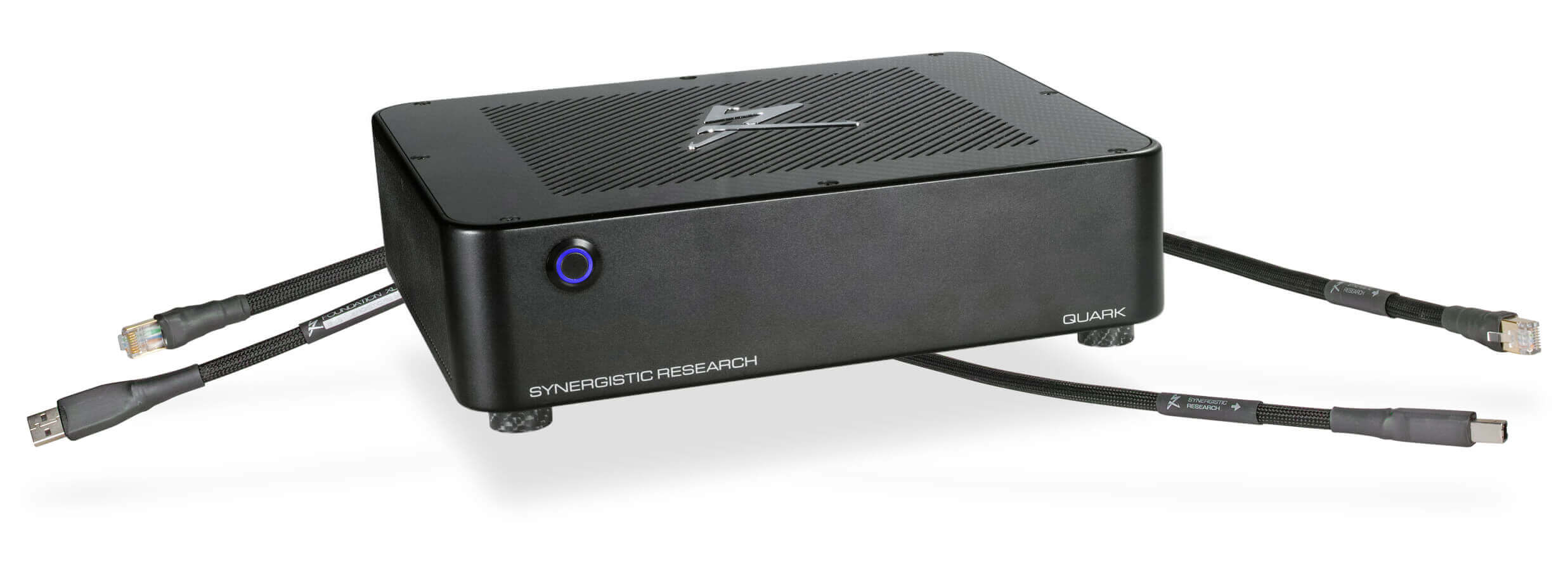
USB and Ethernet Bundles.
Add up to two with a Quark purchase.
Foundation SX USB / Ethernet +$299 (MSRP $449.00) - 1 meter
Foundation XL USB / Ethernet +$475 (MSRP $695.00) - 1 meter
Atmosphere SX USB / Ethernet +$750 (MSRP $995.00) - 1 meter
Atmosphere SX Reference USB / Ethernet +$1100 (MSRP $1495) - 1 meter
Galileo LUX USB / Ethernet +$4595 (MSRP $5995) - 1 meter
SRX XL USB / Ethernet +$7595 (MSRP $8995) - 1 meter
Power cable upgrades.
One power cable upgrade discount per purchased Quark Server.
Foundation XL 12 AWG -Included (MSRP $995) – 5 ft
Atmosphere SX Excite +$1,095 (MSRP $2,495) – 5 ft
Atmosphere SX Euphoria +$1,895 (MSRP $3,495) – 5 ft
Galileo LUX +$8,100 (MSRP $10,495) – 6 ft
SRX XL +$13,005 (MSRP $15,500) – 6 ft
Buy the Quark with the Router or Switch, Get Two Atmosphere SX Ethernet Cables Free
$1,990 value free
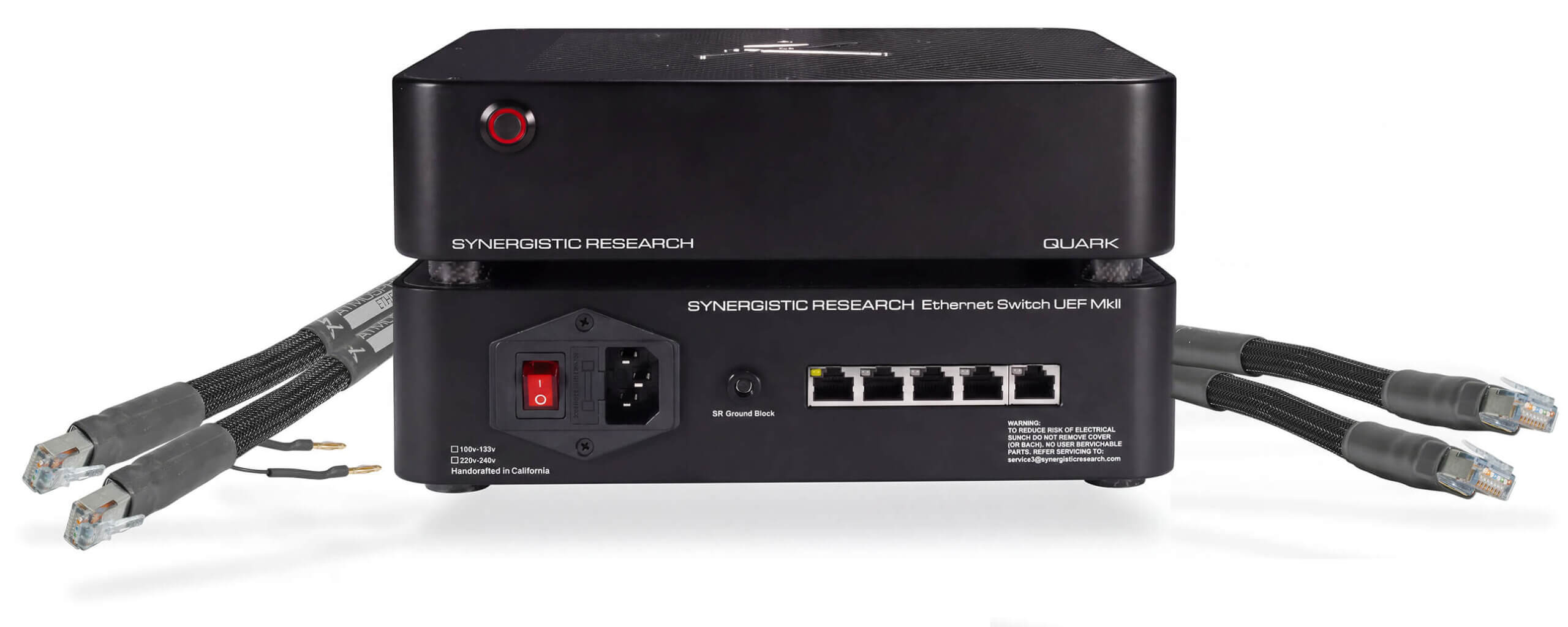
Package a Quark with either the Ethernet Switch UEF or the Network Router UEF and you’re no longer treating symptoms one box at a time — you’re conditioning the entire path the signal travels before it ever reaches your DAC. Take the bundle and two Atmosphere SX Ethernet cables come with it, a $1,990 value at no charge, because the link between two conditioned components deserves to be as quiet as the components themselves. The reason to do it this way is simple: clean the server and leave the network alone, or clean the network and leave the server alone, and you’ll hear what’s left. Do both, connect them properly, and there’s nothing left to hear around.
Free items must be ordered at the time of purchase. Items that are added on after the original order will NOT qualify. Cannot be combined with other offers.
Buy the Quark with the Router and Switch, Get Three Atmosphere SX Ethernet Cables Free
$2,985 value free
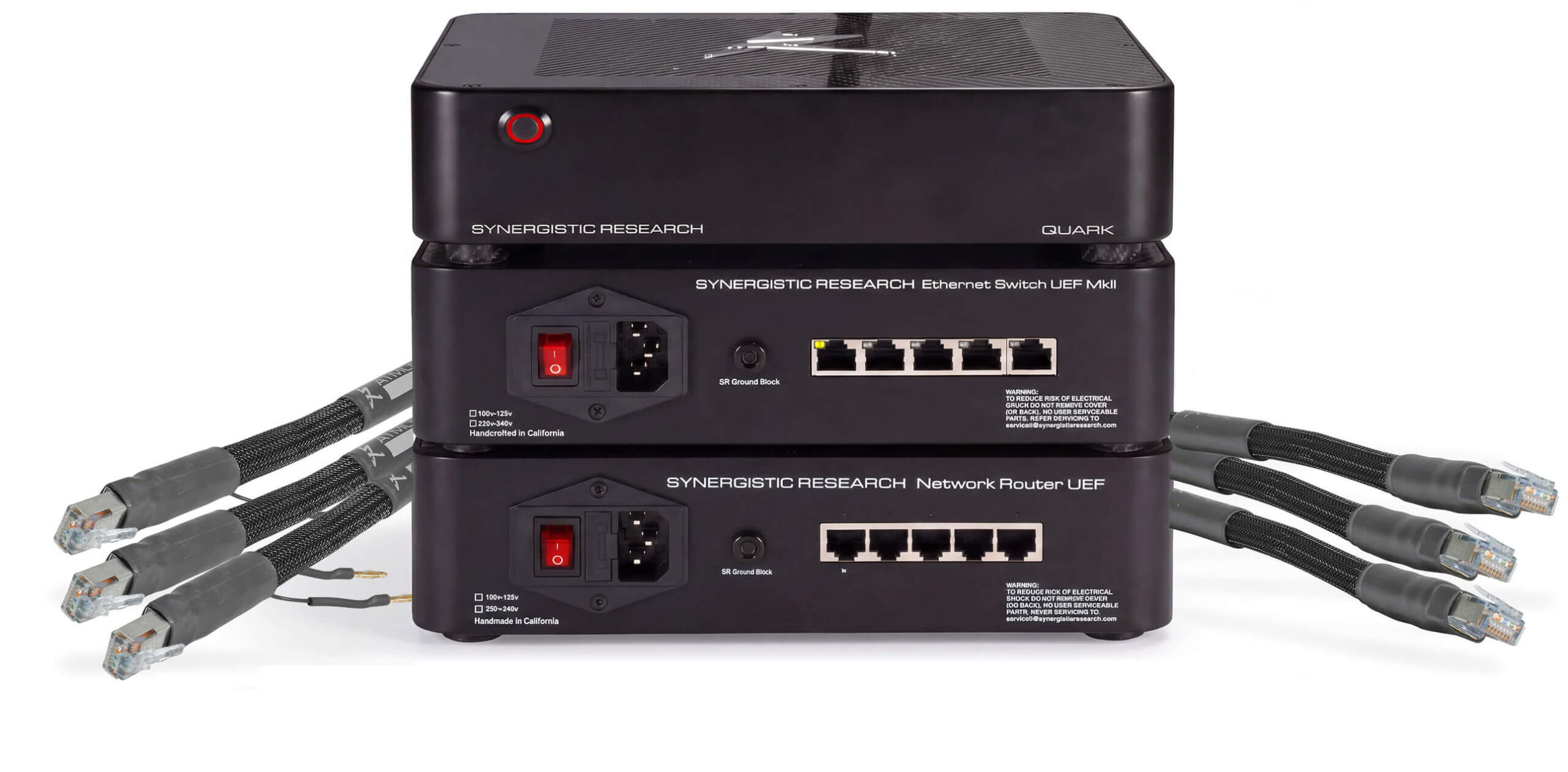
This is the whole path. Quark, the Ethernet Switch UEF, and the Network Router UEF — routing, switching, and streaming each isolated, each conditioned, each handed off to the next by an Atmosphere SX Ethernet cable. Nothing here is a stack of upgrades competing for credit. Break up digital routing from digital switching, take the computer’s noise out at the source, and connect the three with cable built to the same standard, and what arrives at your DAC is a signal that has had nothing done to it since the wall. That’s the point. Not more, but less, all the way down.
Free items must be ordered at the time of purchase. Items that are added on after the original order will NOT qualify. Cannot be combined with other offers.
Synergistic Research Streaming Music Server Reviews

“The Quark provided the finest digital sound quality that I have yet experienced in my listening room. The noise floor [in my system] has never been an issue or even noticeable in the past. But now, there was a blackness and a clean slate like never before. Vocals and instruments just seemed to jump out of the soundstage. There was a newfound level of clarity and definition, but not with all the added edge and ringing that can sometimes come along for the ride with this much detail.
Robert Youman, Positive Feedback, June 2026

Synergistic Research founder Ted Denney joins us at The Music Room for a first look at the new Synergistic Research Quark Music Server.
The Music Room, June 2026

Robert Taylor goes 3-for-1 in this review of the Synergistic Research Voodoo Streamer, SR Network Switch, and SR Router. Is there something more than magic going on in the sleek, stylish, Synergistic boxes, listen in to hear Robert’s thoughts.
Robert Taylor, The Absolute Sound, February 2025